
Your essential Uk training - The River Spey descent
The Overview
UK Training Course – Spey Descent
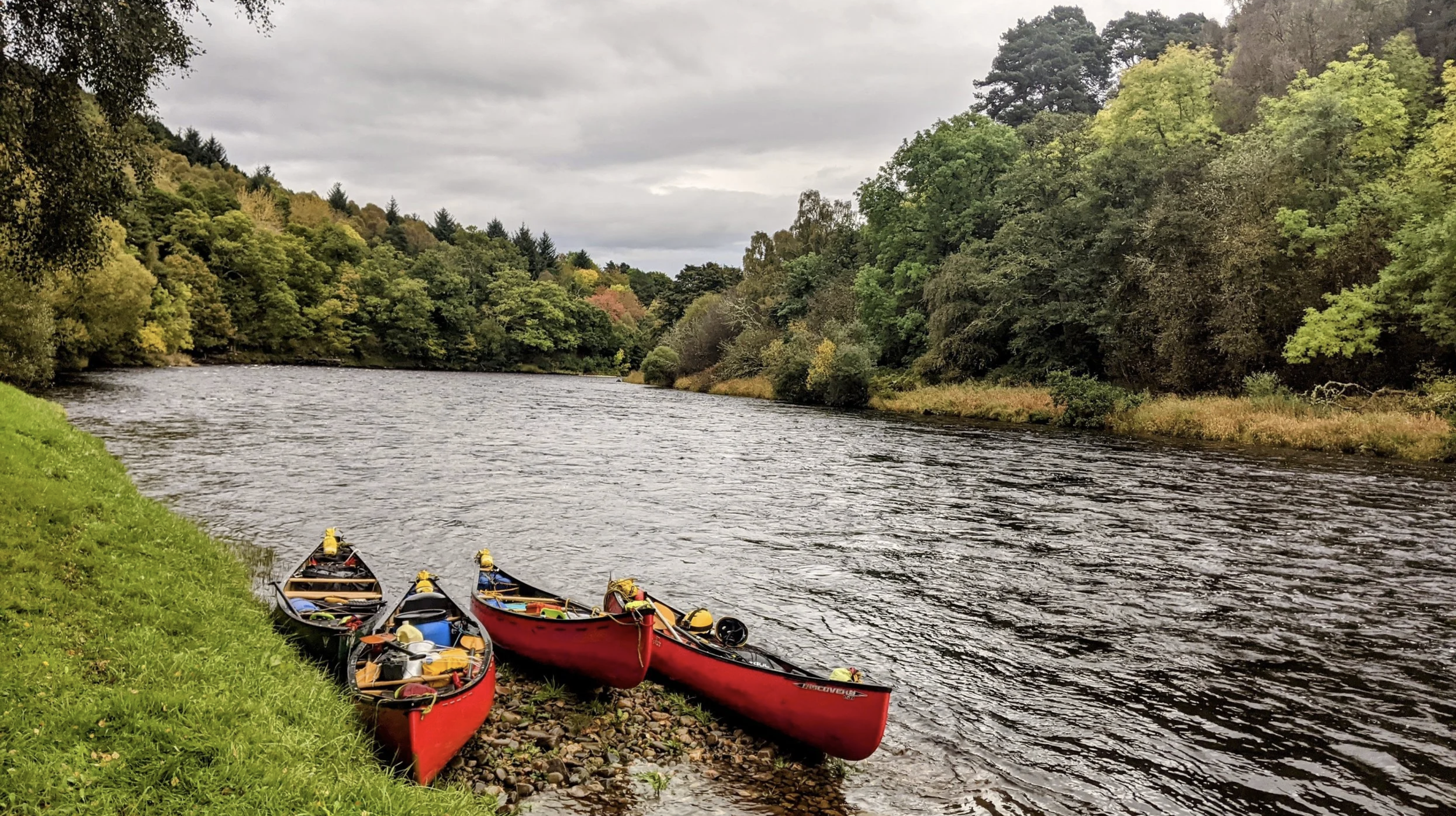
Starting at Loch Insh and finishing at Knockando after the rapids, this four-day journey is our UK training course for the Yukon expedition. It is built to give you a realistic introduction to the daily routine of expedition canoeing before heading to Canada. You will paddle, pack and unpack boats, build camp, manage wet kit, refine your systems, and get used to the steady discipline that makes longer river journeys work. Just being on the Spey is valuable in itself too — it is one of the classic canoe journeys in the UK, and a river many paddlers never get the chance to travel properly in this way.
Just as importantly, it gives you space to make mistakes in a useful setting and improve on them before the main trip. We cover kit choice, packing, campcraft, rescue skills, paddling technique, and the general flow of travelling well on the river. The Spey is ideal for this because the journey develops nicely across the four days and finishes on water harder than anything you are likely to encounter on the Yukon. That should leave you going into the expedition with solid experience behind you and a good level of confidence.
The Itinerary
-
We leave Newcastle at 07:00 and drive north to Loch Insh, arriving at around 13:00. After meeting the group and sorting kit, we look at how to pack efficiently for a canoe expedition, carry boats safely, and organise expedition rations. We then head onto Loch Insh for a flat water paddling session to introduce and consolidate core techniques before leaving the mouth of the loch and entering the Spey. From there we begin the journey properly, paddling downstream to Aviemore. This first day sets the tone for the rest of the course: getting used to the boats, starting to work as a team, and putting simple expedition systems into practice from the outset.
Flat water / Grade 1 – 11.5 km -
We continue downstream from Aviemore, gradually leaving the Cairngorm mountain range behind as the journey begins to feel more established. The river remains relatively friendly, giving time to build consistency in paddling technique, boat control, packing routines, and decision-making as a team. By this point the daily rhythm of expedition travel usually starts to click into place.
Flat water / Grade 1+ – 21 km -
Today the river begins to build more noticeably as we continue past Grantown and on towards Cragganmore. There is more moving water, more to read, and more opportunity to refine line choice, communication, rescues, and general river skills. This is where the journey starts to ask a little more of the group, while still giving plenty of opportunity to learn and improve as you go.
Up to Grade 2 – 26.5 km -
We make an early start for the final day, paddling on from Cragganmore to Craigellachie and negotiating the Knockando Rapids on the way. This is the hardest water of the trip and provides a strong finish to the course, building confidence before heading out to the Yukon. We finish with lunch before loading up and driving back to Newcastle.
Up to Grade 2 – 21.5 km
Packing List
-
Canoe
Buoyancy aid
Paddle
Helmet
Tent
Stove
150litre dry bag
50litre sealed barrel
-
Full length or short sleeved wetsuit 3mm or 5mm (thicker it is the warmer but less movement)
Swimwear to wear under your wetsuit.
Waterproof Jacket with hood
Waterproof trousers with side zips (https://www.outdoorclothing.co.uk/mens-c4/trousers-c36/mens-deluge-2-0-pant-p12034?srsltid=AfmBOooZMsWUNDKnMSPCh7vp2JcAbGx0nYAjci4nbk0PTYZzCAoJYesH)
Thin synthetic or wool base layer if you prefer extra comfort under the wetsuit
No cottonOld trainers, wetsuit boots, or other secure footwear you do not mind getting wet
Warm socks for before and after paddling
Sun cap
Warm hat and cloves (spare of each)
Sunglasses - not super expensive ones incase you loose them if you fall in/when you fall in ;)
Knee pads - something like these (https://dvspowertools.co.uk/shop/safety-workwears/knee-pads/dewalt-dwst590014-flooring-knee-pads-with-gel/)
-
Towel
Toiletries
Any personal medication
Sun cream
Lip balm
2 x Nalgene Water bottles 1litre (water will be boiled/filtered so bottle needs to be capable of taking boiling water)
Snacks
Flask for hot drink 1litre (https://www.amazon.co.uk/Stanley-Classic-Legendary-Vacuum-Bottle/dp/B000T21JFE?th=1)
Phone in a waterproof case or small dry bag
Personal first aid items such as blister plasters if needed
-
Long handled Spork
Roll Matt (We rent for course & expedition - course rental £20)
Sleeping Bag comfort + liner rating down to -2 (We rent for course & expedition - course rental £35)
Comfortable dry clothes for camp.
Warm fleece/down jacket for cold evenings
Headtorch
Powerbank for electricals (min 10000Mah
-
Please pack your kit in soft bags only. Your personal kit will go into the 150L dry bag and 50L sealed barrel, so avoid hard suitcases or bulky rigid bags.
-
Description text goesJeans
Cotton hoodies for paddling
Wellies for paddling
Loose footwear that may come off in the water
Valuable items you do not want to risk getting wet here
-
Bring one full set of dry clothes to change into at the end of the day.
Even in May, conditions on the Spey can feel cold when wet or windy.
Inclusions
Guiding (Jamie + Robin)
3 main meals, 3 Desserts
3 Breakfasts
Tent and stove Systems
Canoe, Barrel and dry bag
Paddle, Helmet, Buoyancy aid
Exclusions
Travel to and from venue
Snacks and lunches (these will be long days make sure you pack lots of food to keep your energy levels up. Wraps/Oatcakes/Ryvita and primula/cheese, pepperami, soups etc etc work great for lunches.
Personal equipment