
Scotland Training course
Scotland Training Weekend – 2027
Our Scotland training weekend is designed to bring the team together before the expedition and introduce the key safety systems, routines, and practical skills we may need from the very start of the journey.
On these expeditions, it is entirely possible to step off a train, bus, or taxi and straight into difficult weather. That is not unusual. The aim of this weekend is to make sure the essential skills have already been introduced, practised, and discussed before we are relying on them in real conditions.
It is not about trying to turn everyone into experts in two days. It is about giving the team a shared understanding of how we move, manage kit, stay warm, respond to problems, and look after each other when the weather is poor and decisions matter.
For 2027, we have arranged a great deal with the team at Loch Insh Outdoor Centre, giving us a strong base for the weekend and a much better structure for running the course. This means we can combine evening meals, lectures, planning sessions, and practical hill days from one location, rather than trying to piece everything together around separate venues.
The weekend is guiding and instruction only, so accommodation, personal travel, and personal equipment remain your own responsibility unless otherwise agreed.
The exact plan will remain flexible. Ground conditions, weather, snow cover, and the needs of the group will all shape how we use the time. The aim is not to follow a rigid timetable, but to make the best use of the weekend and cover the most important preparation before the expedition.
Key Areas of Learning
Over the weekend we will aim to cover:
Avalanche awareness, including basic use of transceivers, probes, and shovels
Emergency scenarios and group response
Familiarisation with expedition tents, stoves, and pulks
Basics of skis, skins, waxes, snowshoes, and winter movement
Personal clothing systems and staying warm in cold environments
Presentation of the packing list and personal equipment systems
Pulk packing, weight management, and organisation
Key hazards, decision-making, and acceptance of risk forms
Expedition itinerary, logistics, and final questions
Fitness expectations, final training advice, and last-minute areas of focus before departure
Weekend Structure
-
Please aim to arrive at Loch Insh Outdoor Centre by late afternoon on Friday.
We will begin the weekend with a meal together (19:00) , giving everyone a chance to meet the team, settle in, and start getting to know the people they will be travelling with on expedition.
After the meal, we will run the first lecture of the weekend. This will frontload some of the key skills, systems, and decision-making that we will build on during the practical days. The aim is to give you a clear framework before we head out into the hills on Saturday morning.
This session may include:
Expedition overview and objectives
Key hazards and acceptance of risk
Clothing and layering systems
Personal kit expectations
Cold weather routines
Overview of tents, stoves, pulks, and group systems
Initial questions and discussion
-
Saturday will be based outside in the hills, using the best terrain and conditions available to us at the time.
The focus will be on practical expedition systems and winter movement. Depending on conditions, we will cover areas such as avalanche awareness, emergency response, basic use of transceivers, probes and shovels, ski or snowshoe movement, and working efficiently as a team in winter conditions.
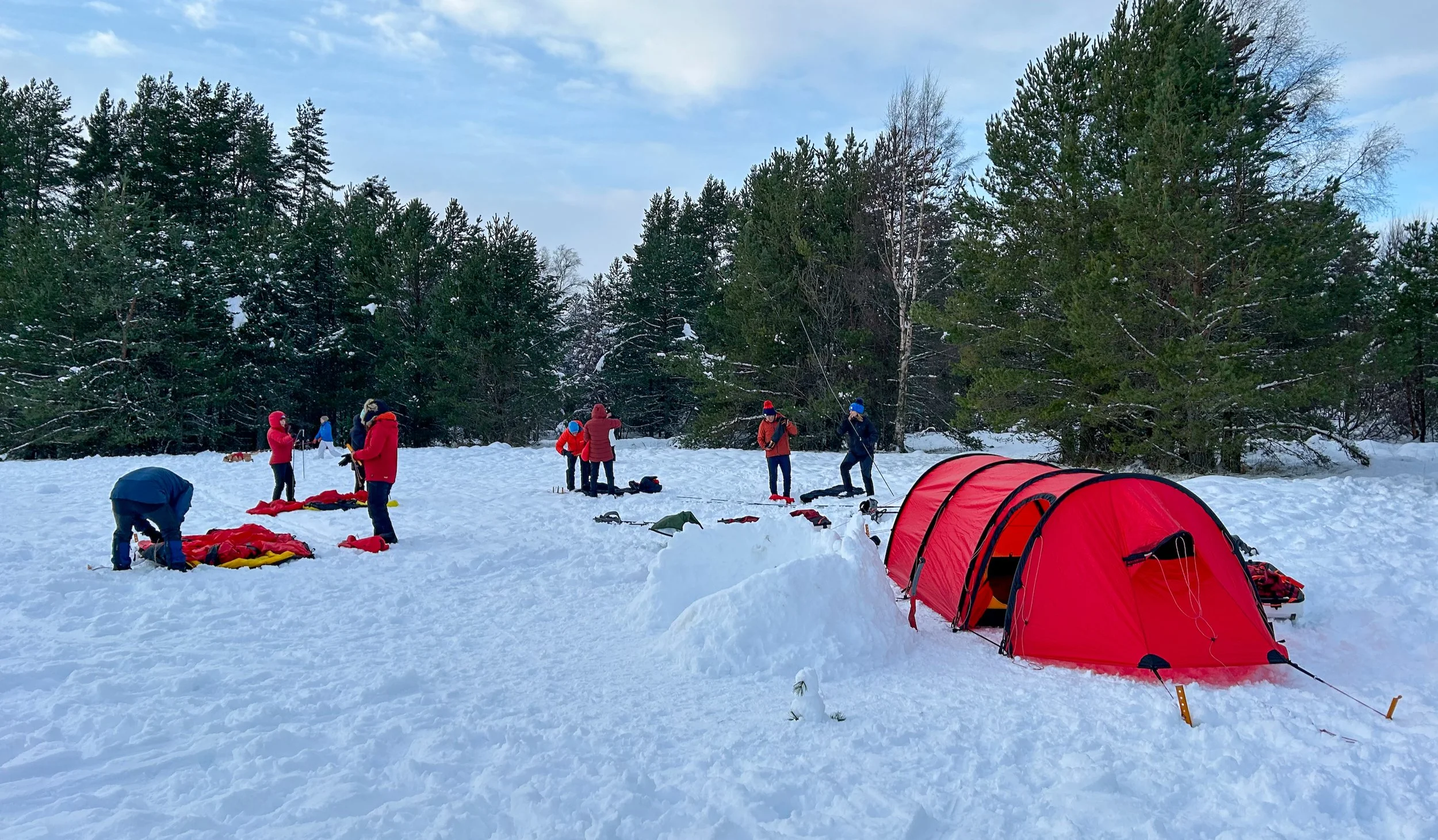
We will also use the day to introduce or revisit the equipment you will be using on expedition, including tents, stoves, pulks, and personal kit organisation.
The emphasis is not on rushing through a fixed programme, but on giving you a useful working understanding of the systems before the main expedition.
-
On Saturday evening we will return to Loch Insh for a group meal and a second lecture.
This session will be used to consolidate the learning from the day and go into more detail on expedition routines, logistics, packing systems, and any questions that have come up during the practical training.
This is also a useful time to talk through personal equipment choices, what is working well, and what might need changing before the expedition.
-
Sunday will also be based out in the hills.
The plan for the day will depend on conditions and what we covered on Saturday. It may be a winter hill day, a ski or snowshoe journey, a practical scenario-based day, or a mixture of all three.
The aim is to bring the weekend together and put the learning into context. We will look at how the skills and systems link together during a real expedition day, including movement, group management, decision-making, staying warm, and dealing with simple problems before they become bigger ones.
We will also use the final session to talk through fitness expectations, what to focus on in the last few weeks before departure, and any final changes people may need to make to their kit, training, or personal preparation.
We will finish with time for final questions, expedition logistics, and any key points that need to be covered before departure.
-
Although we will make the weekend as practical and engaging as possible, there will still be periods where we are standing around, discussing equipment, working through scenarios, or waiting for others to complete tasks.
A good layering system, big warm over-layers, spare gloves, and a hot flask will be essential. Staying warm during training is often harder than staying warm while moving.
Packing List
-
Nordur will provide the group equipment needed for the practical training sessions, including:
Expedition tents for familiarisation and training
Expedition stoves for familiarisation and training
Pulks for packing, handling, and systems practice
Avalanche training equipment, including transceivers, probes, and shovels
Skis and ski boots for use during the weekend
Instruction, guiding, safety management, and evening lectures
The skis, boots, pulks, tents, and stoves are provided for training use during the weekend. They are not a substitute for bringing your own personal winter hill kit unless this has been agreed in advance.
-
Please bring the following as a minimum:
Rucksack & Hill Equipment
Rucksack, minimum 45 litres
B1 winter boots
Gaiters
Crampons, if you have them
Ice axe, if you have one
Helmet, if you have one
Please make sure your boots are stiff enough for winter hill use. As a guide, you should not be able to easily bend the boot in on itself. If you are unsure whether your boots are suitable, send a photo in advance and we can advise.
Food, Drink & Personal Items
1-litre Thermos flask
2 litres of water capacity between bottles
Food and snacks for being out all day on Saturday and Sunday
Head torch
Spare batteries or charging pack
Personal first aid kit, including blister care
Sun cream
SPF lip balm
Map and compass for the Cairngorm area, if you already have them
1:50,000 scale is ideal
-
You need to be dressed for full winter hill conditions, including cold temperatures, wind, snow, and periods of standing still.
Base Layers & Insulation
Technical walking socks
Thermal base layer top
Long johns / full-length thermal underwear
100g fleece, ideally with a hood
Synthetic or fleece gilet
Softshell jacket with hood, or light synthetic/down jacket
Heavy down-filled jacket or very warm synthetic jacket
The large warm jacket is important. This is the layer you will put on when we stop for briefings, scenarios, kit checks, or lunch.
Legwear & Waterproofs
Winter walking trousers, softshells, or salopettes
Waterproof jacket with hood
Waterproof over-trousers
Waterproof over-trousers must have full-length side zips so they can be put on and taken off without removing boots.
Head & Face
Warm hat
Sunhat
Balaclava or face mask
A balaclava is strongly recommended. A buff can be used instead of a face mask, but only if you already know that system works for you in cold and windy conditions.
Hands & Eyes
Cold hands make simple tasks difficult very quickly, especially when working with stoves, tents, pulks, skis, or avalanche equipment.
Please bring:
Lightweight thermal gloves, such as Rab Powerstretch or similar
Medium-weight gloves or mitts
Windproof and waterproof over-mitts or very warm gloves
Ski goggles
Sunglasses, Category 3 or 4
Both goggles and sunglasses are required. Sunglasses may feel optimistic in Scotland, but bright snow, wind, and spindrift can make eye protection essential.
Inclusions
Guiding (Jamie + Robin)
3 main meals, 3 Desserts
3 Breakfasts
Tent and stove Systems
Canoe, Barrel and dry bag
Paddle, Helmet, Buoyancy aid
Exclusions
Travel to and from venue
Snacks and lunches (these will be long days make sure you pack lots of food to keep your energy levels up. Wraps/Oatcakes/Ryvita and primula/cheese, pepperami, soups etc etc work great for lunches.
Personal equipment