Finnmarksmarka Itinerary & Logistics
The Overview
Finnmarksvidda is an open plateau crossing with no single fixed line through the landscape. Conditions, visibility, snow cover and the movement of the group will all shape the route we take each day. There may be snowmobile marks or local travel lines in places, but we are not following prepared winter trails or relying on a marked route across the plateau.
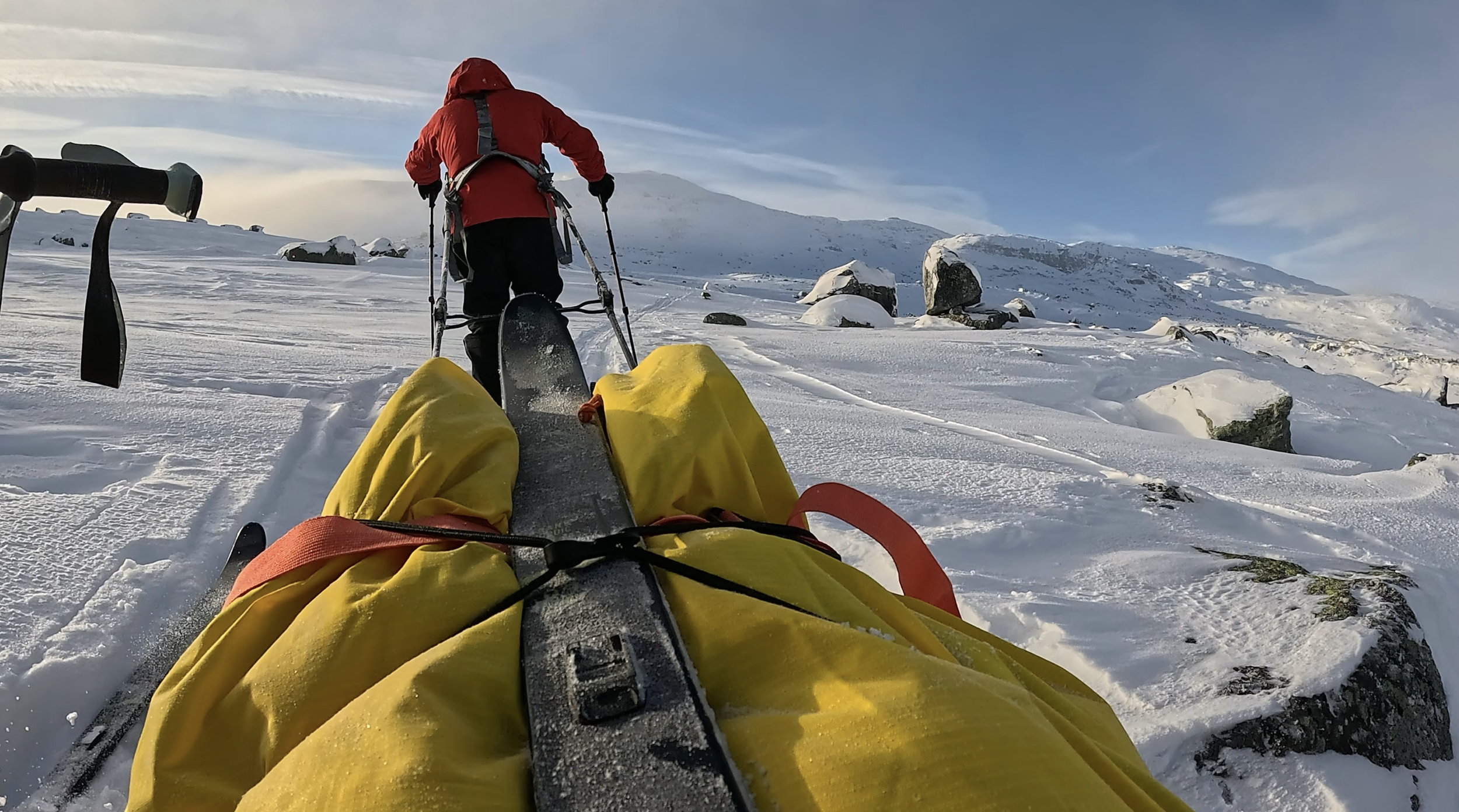
This journey is designed as a practical expedition crossing, with skills developed and reinforced as part of daily travel. The aim is not to separate training from the journey, but to build good habits through the normal routines of moving, navigating, camping and managing yourself in cold conditions. Across the crossing we will work on the core skills that underpin safe and efficient polar travel: cross-country ski movement, pulk hauling, campcraft, stove routines, winter navigation, emergency shelters, cold injury prevention, ice thickness assessment, lake crossing procedures, snowpack awareness and basic avalanche emergency procedures where relevant.
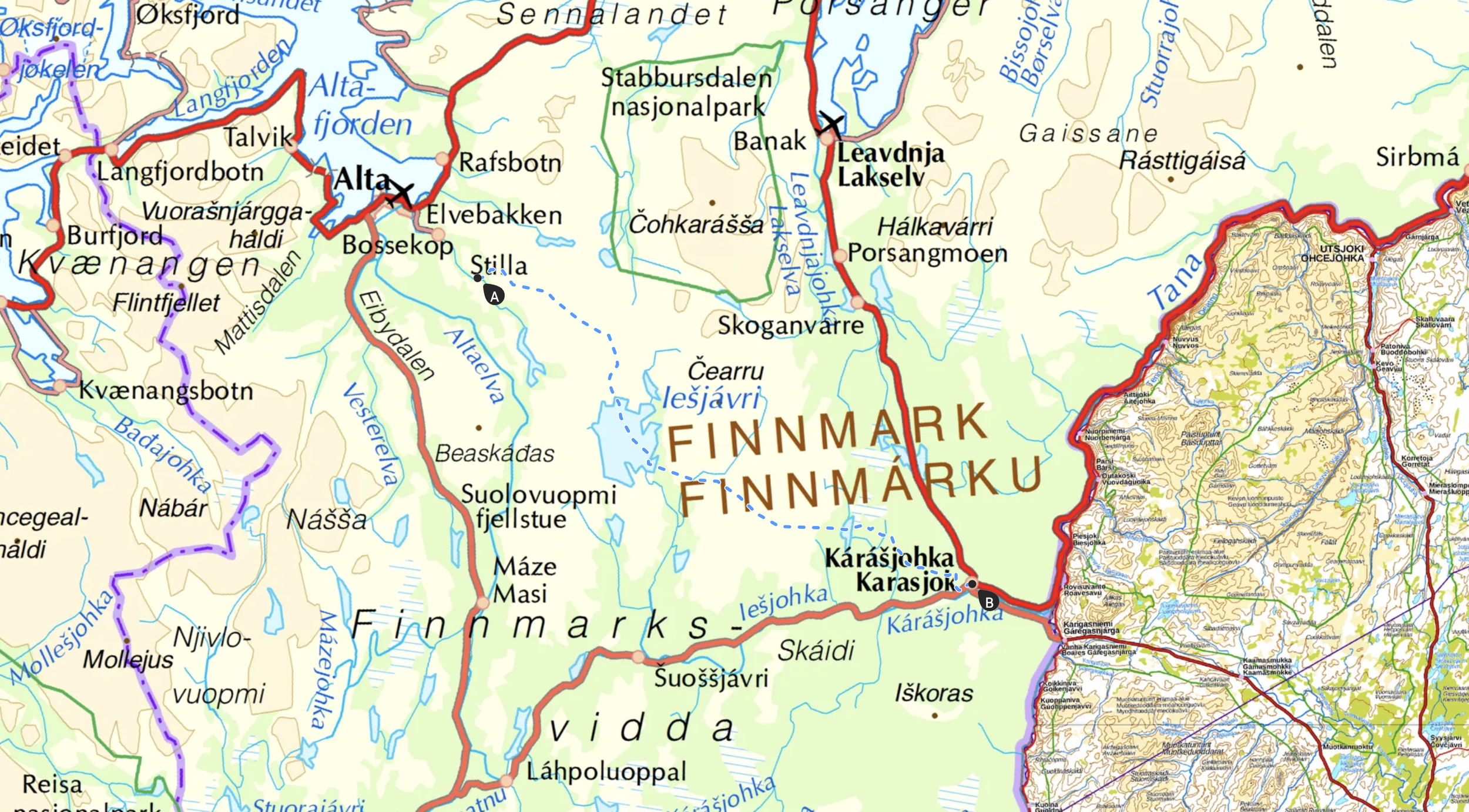
The route travels from the Alta side of the plateau towards Karasjok, crossing open ground, frozen lakes, low hills and shallow valleys. This is a landscape shaped by reindeer movement and by the long-standing seasonal use of the land by Sámi communities. It is also an area where you may see, or find signs of, reindeer, moose, fox, ptarmigan and other Arctic wildlife, with the possibility of more elusive animals such as wolverine moving through the wider region.
The ground is not technically steep, but that is not what makes the crossing serious. The challenge comes from distance, exposure, cold, repeated daily routines, and the need to keep making good decisions when tired. You should expect to finish with tired legs, a full head, and a clearer understanding of the habits, judgement and efficiency needed for longer and more committing polar objectives. For those with bigger ambitions, Finnmarksvidda provides an excellent foundation and launching platform for future expeditions in places such as Svalbard, Greenland or even the South Pole.
The Itinerary
-
We meet in Alta, sort equipment, check personal kit, organise food and fuel, and pack the pulks for the crossing. This is the point where the trip starts to become real: bags are stripped down, tent teams are organised, stove systems are checked, and everything has to fit into a working expedition system.
The evening is used for a route briefing, weather discussion, and final preparation before heading out onto the plateau the following morning.
-
Approx. 18 km | 223 m ascent
The crossing begins near Stilla, above the Alta valley. The first day moves steadily away from the road and onto higher ground, climbing towards Repfjellet and Reaipovárri.
This is a useful first stage: enough distance to get properly moving, but still early enough in the trip to adjust layers, pulk harnesses and personal systems before the bigger open sections ahead. The terrain is broad and rolling, with small frozen lakes and shallow rises leading towards the Urvannet / Juovvajávri area.
Camp is made on the plateau, with the first full evening of tent routines, snow melting, stove work and sorting kit in the cold.
-
Approx. 18 km | 120 m ascent | 268 m descent
From the first camp, the route continues east and south-east across open ground, passing the rounded hills around Ginusvárri and Rissečohkka.
The day has more descent than climb as the route drops towards the Iešjávri basin. The landscape begins to open out properly here, with longer views, fewer obvious features and more emphasis on steady pacing and navigation between frozen drainage lines, shallow cols and small lakes.
By the end of the day we reach the north-western side of Iešjávri, one of the major features of the crossing.
-
Approx. 18.2 km | 42 m ascent | 40 m descent
This is the main lake-crossing day. Iešjávri is a huge frozen expanse, and conditions will decide how simple or serious this section feels.
In clear weather, it is a steady day of distance, using islands, shorelines and small features to break up the scale of the lake. In poor visibility or wind, it becomes a far more committing navigation day, with very little shelter and few obvious reference points.
The route crosses the main body of the lake before bending south-east through the islands and bays towards the Gavdnajávri side. Camp is made after leaving the largest open section of the lake, depending on snow, ice and wind conditions.
-
We move towards the frozen expanse of Femunden lake, watching for wildlife and preparing for lake travel. The focus is on ice thickness assessment, lake crossing procedures, identifying hazards, and building a clear process for judging when and how to travel on frozen water. We continue refining camp systems and expedition habits, with time for ice fishing if conditions allow.
-
Approx. 18.2 km | 3 m ascent | 155 m descent
This is a long, gradual descent across the eastern side of the plateau. The route crosses the Ráidejohka area, then continues through Ruossajávri and Geaimmejávri before following the lie of the land towards Geaimmejohka and the Leibejohka area.
On the map, the ascent is minimal, but this can still be a hard day if the snow is soft, the wind is against the team, or the pulks are dragging heavily. The ground starts to feel more enclosed as the route drops into more defined valleys and the first signs of lower, more sheltered terrain appear.
This is likely the final full tented night before reaching Karasjok.
-
Approx. 14.7 km | 43 m ascent | 153 m descent
The final travel day follows frozen watercourses and shallow valleys past the Duobbajávri and Nágirjávri area before bending down towards Karasjok.
The character of the journey changes during the day. The open plateau gives way to more trees, more defined tracks, and eventually the edge of the settlement. The final descent needs care, especially for anyone travelling on skis with a pulk behind them.
The crossing finishes in Karasjok, where the priority is simple: get warm, dry kit, shower, eat properly and let the body realise it has stopped moving.
-
This day gives the itinerary some breathing room. If weather, visibility, snow conditions or team pace slow the crossing, it can be used as a buffer. If the route has gone to plan, it becomes a practical recovery day in Karasjok: drying equipment, sorting group kit, repacking pulks and bags, and getting ready for travel home.
-
After breakfast, we transfer from Karasjok for onward travel and flights home.
Finnmarksvidda Kit List
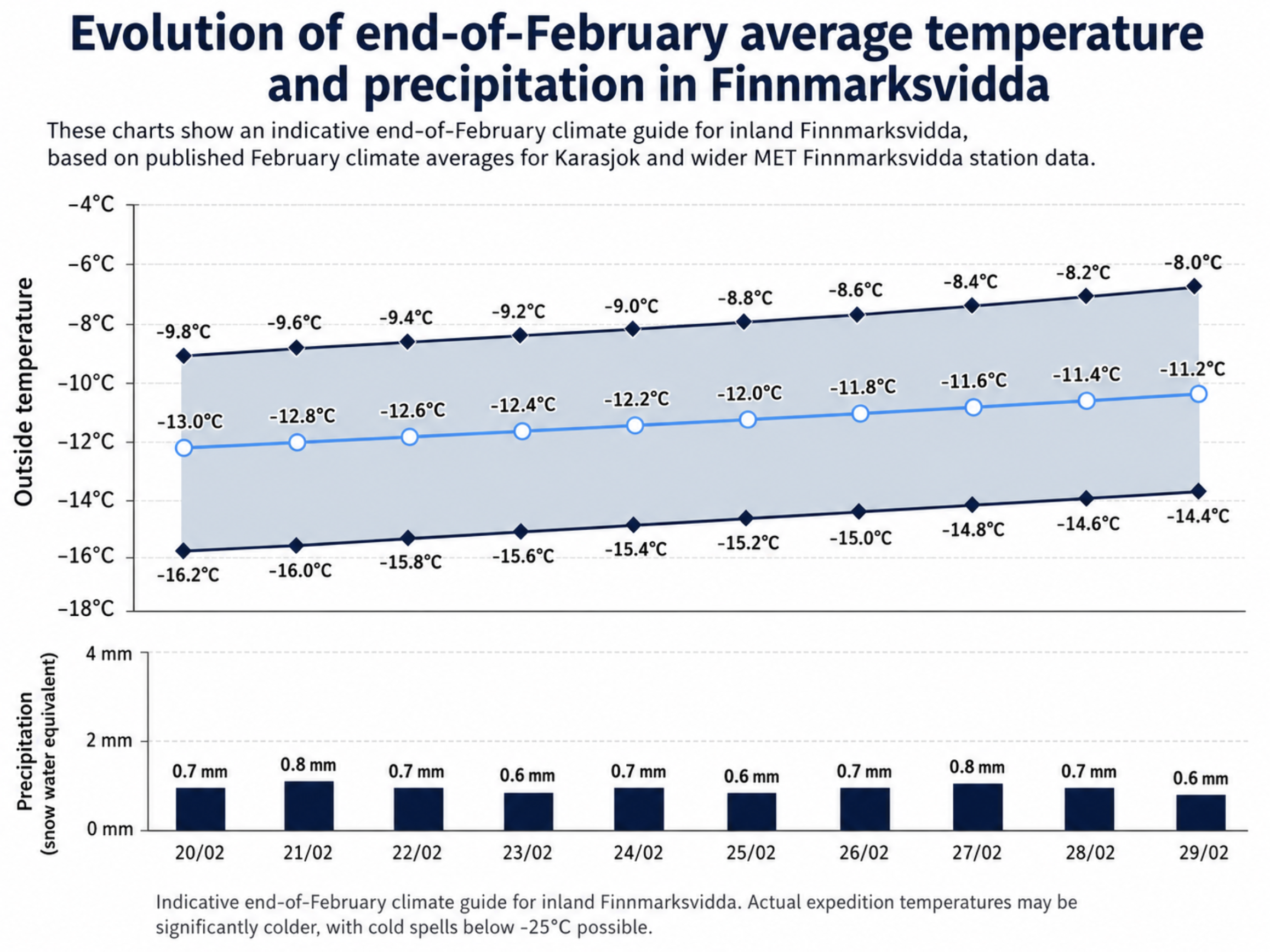
Finnmarksvidda in late February is a cold winter environment, with short daylight hours and the potential for very low temperatures. This kit list is designed for multi-day Nordic ski travel with pulks, tents, and stove-based camping.
Every item on this list plays an important role in the safety and smooth running of the expedition. Good kit, packed well, helps you stay warm, manage yourself properly, and function efficiently in cold conditions.
Nordur provides the main group expedition equipment, including tents, pulks, stoves, fuel, group safety equipment, communications, and first aid kit. You are responsible for your personal clothing, sleeping system, eating kit, and other items listed below.
Any items available to rent through Nordur are underlined and marked with a star. Rental prices can be found in the bottom right-hand side of the drop-down menu for each relevant item.
We will go through all kit on arrival and complete a final kit check before departing.
-
Pulk, Harness, and rigid or roped system.
Avalanche Transceiver and batteries.
Snow shovel.
Avalanche Probe.
Hilleberg Keron 3 gt polar tent with snow pegs (per tent team)
MSR XGK liquid expedition Stove , Artic pump, flint and steel, windproof matches, maintenance kit and fuel.
Heat mat stove platform system
Tent brush
-
Windproof and waterproof over-mittens/Gloves (medium weight) - £20
Windproof and waterproof over-mittens/Gloves (heavy weight) £30
Heavy Down filled jacket - £65
4 season sleeping bag sleeping bag and liner (rated to minimum -15 comfort rating) includes 35l Ortlieb heavy duty drybag. - £80
Full-Length Mat/Thermarest - £40
Cross country skiing setup - Boots, Skis, skins and poles with snow baskets - £190
Arctic Bedding bag - £30
-
* 4 season sleeping bag sleeping bag and liner (rated to minimum -15 comfort rating.)
* Full-Length Mat/Thermarest (Neo air or Exped equivalent would be ideal - this will be vital for keeping you
warm at night as we will be sleeping on the snow.)1 litre Thermos Flask + 2 Litre drinking bottle, (Nalgene etc) camping mug and 2 sporks (preferably the
titanium ones that don’t snap in the cold.)Head torch (new batteries) and 3 x spare batteries this must be bright enough for you to walk comfortably
for several hours in the dark.Basic First Aid Kit including: antiseptic cream, throat lozenges, diarrhoea treatment (Imodium), painkillers,
plasters and blister treatment, and rehydration salts (Dioralyte), antibacterial hand wash.Sun protection factor 30 minimum (including total bloc for lips Factor 50 minimum)
Wash bag/toiletries & small towel ( Keep this to bare minimum - face wipes are ideal for washing)
“Pee Bottle” (one of the Nalgene bottles above will be used for this preferably a red one, with tape so you can feel its not your drinking bottle in the dark)
Book/Kindle & IPod/Music player
* Cross country skiing setup - Boots, Skis, skins and poles with snow baskets.
Gaiters
-
Technical walking socks 2/3 pairs (variety is key - liners, light hikers, summit socks for specific conditions)
Slippers (for use in the tents) down or synthetic hut booties are ideal. (not essential you can just use a thick pair of socks)
Synthetic or fleece Gilet
100g fleece ideally with hood
Softshell jacket with hood or light synthetic/down
Winter walking trousers soft shells or salopettes.
Long johns (thermal full length underwear) & thermal base layer shirts (2 short sleeve, 1 long sleeve)
* Heavy Down filled jacket or very heavyweight synthetic jacket.
Waterproof jacket with hood and waterproof over-trousers (Must have full length zip)
Sunhat & warm hat.Balaclava or facemask (Balaclava is essential)
A buff could be used instead of a face mask, providing this is a system that has been used and worked for you before.
Eyewear- ski goggles and sunglasses (Category 3/4) both will be required.
Lightweight thermal gloves (Rab Powerstretch)
* Windproof and waterproof over-mittens/Gloves (Medium weight)
* Waterproof mittens/gloves (Heavy weight) if in doubt go warmer.
The detail
Cost per person £3195
Inclusions
All meals are included from breakfast on Day 2 through to lunch on Day 8.
If the team reaches Karasjok ahead of schedule, we will make a group decision on whether to remain out on expedition or head into town. If we choose to finish early and return to civilisation, any additional costs from that point onwards — including meals, drinks, accommodation upgrades, transport, or other personal expenses — will be your own responsibility.
All in country transfers
Equipment – Pulk system, Tent system, stove system, group safety/comms equipment
Polar/Arctic guide (Jamie the director + another if numbers require)
2 night hotel 6 nights tents.
Exclusions
Flights and transfer to UK airport
Insurance
Anything not stated in Inclusions
Personal equipment