
HARDANGERVIDDA OR SAREK?
Two Level 3 winter crossings. Two very different journeys.
Both involve multi-day winter travel, skis, pulks, wild camps and operating as an expedition team. But the landscapes — and the experience of moving through them — are very different.
Which crossing is right for you?
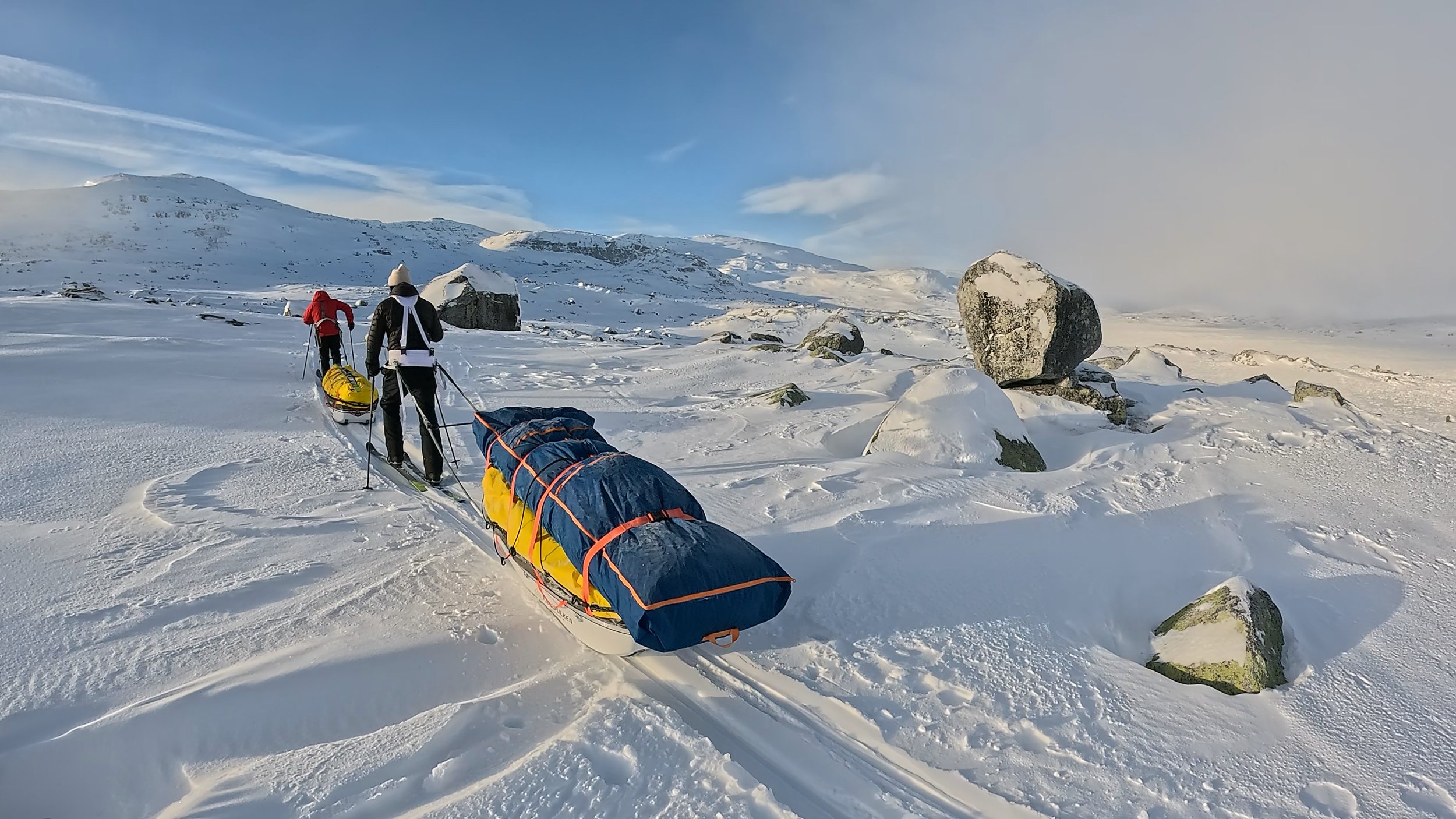
Hardangervidda has a serious place in polar and wartime history. Roald Amundsen’s early winter crossing here nearly ended in disaster, and during the Second World War the plateau became part of the route used by the Norwegian resistance during Operation Gunnerside, later remembered through the story of the Heroes of Telemark.
Today, it remains one of the classic proving grounds for Nordic winter travel. We cross Norway’s largest mountain plateau by ski, travelling with pulks through open, exposed country where the weather often sets the tone.
This is not a hut-to-hut journey. We carry what we need, camp out each night and manage the routines that matter on bigger expeditions: efficient movement, winter navigation, strong camp systems and looking after yourself through long days in cold, wind and poor visibility.
Cross the Hardangervidda - Norway
COST : £2995
DAYS : 9
LEVEL : 3
Limited Availability
Distance on Skis : 135kms
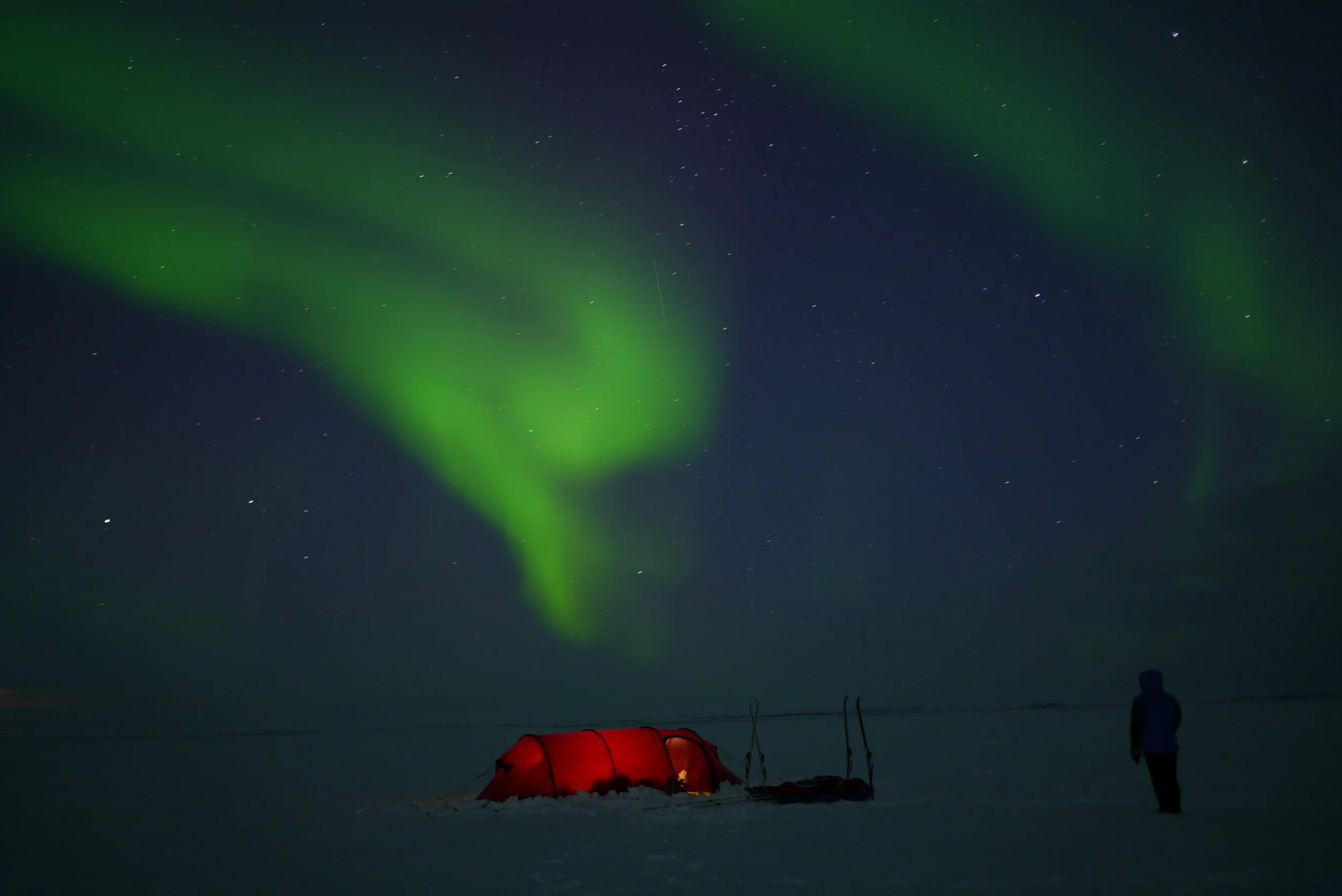
Sarek Crossing - Sweden
Sarek is one of the places I keep coming back to in my head when I think about proper winter expedition travel. It is remote, glaciated, and committing, with no marked winter trails, no huts inside the core zone, and no simple way to step off the route if the weather turns.
We travel as a small team, hauling pulks through deep snow, alpine valleys, frozen lake systems, river crossings, forest and high cols. We will also travel through the world-famous Rapa Valley, normally one of Sarek’s most iconic landscapes, experienced here under winter conditions with the valley floor frozen and snow-covered beneath the surrounding peaks.
COST : £3495
DAYS : 10
Distance on Skis : 140kms
LEVEL : 3
Limited Availability
Sarek or Hardangervidda?
Want to see what this kind of expedition is really like?
This longer video gives a better sense of the day-to-day: travelling with pulks, setting camp, managing the cold, and settling into the routines of winter expedition life.