
Your High Atlas 4000m Summits Itinerary & Logistics
The Overview
A Route Designed for a Massive adventure with Mixed Ability Group
This itinerary has been built with layers of challenge in mind. The direction of travel, timing of the summit days, and the choice of start and finish points have all been carefully set so that a groupwith mixed abilities can move through the mountains together.
Each stage allows those who want to push harder to take on extra summits, technical ridges, or longer days, while others can opt for shorter objectives or alternative descents with local guide support. The result is that everyone is stretched at their own level without splitting the team apart.
Most of the journey is shared side by side: trekking through valleys, climbing steadily to the refuges, and reaching the key high points together. It’s an approach that balances ambition with flexibility and keeps the sense of being one team on the same journey.
The Itinerary
-
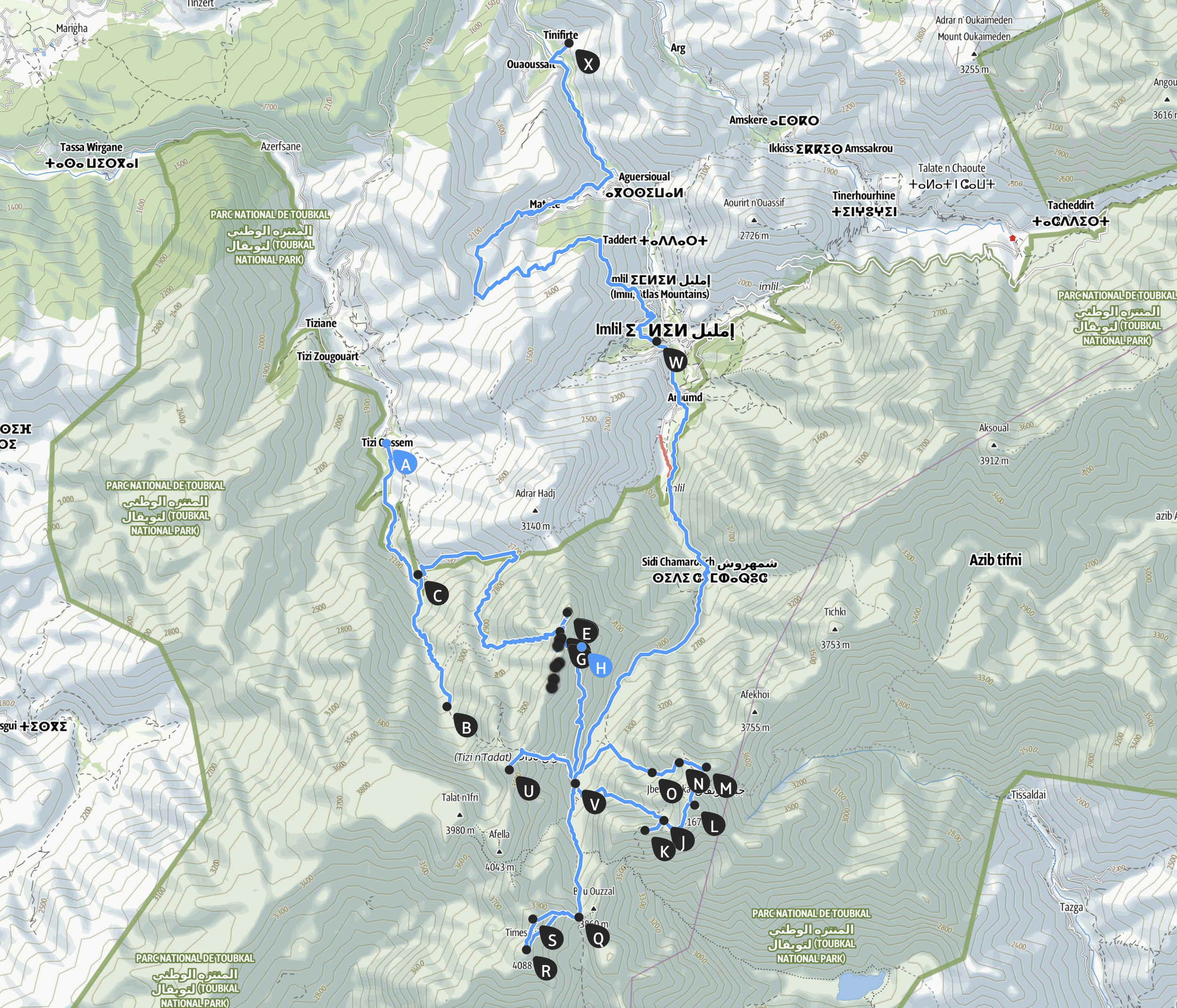
Arrive in Marrakech and transfer straight into the foothills of the High Atlas. We stay at the Wirgane Eco Lodge, set in a quiet valley below the mountains. It’s a calm base surrounded by Berber farming communities, far removed from the tourist bustle, and the perfect place to settle in before the trek begins.
-
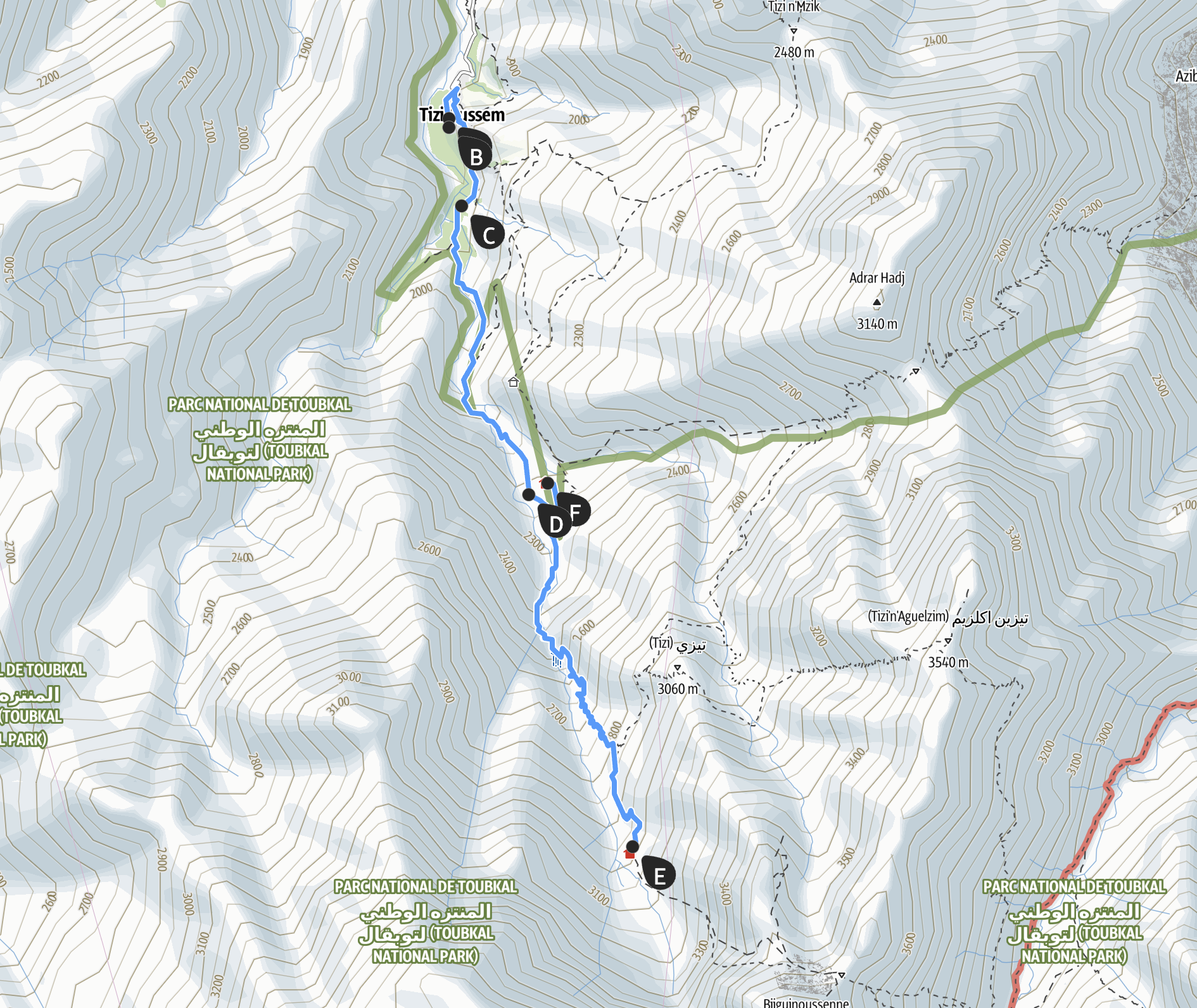
A short drive takes us to the Berber village of Tizi Oussem. Life here still follows traditional rhythms, and the path quickly leaves the village terraces to climb into a quieter valley. By late afternoon we reach the Lepiney refuge, set beneath the steep 600-metre walls of the Tazarhart plateau. Just below the hut a waterfall tumbles down, a natural place to cool tired feet after the day’s climb. It’s a striking setting and a first real taste of the high country. We then descend back down to the Tamsoult refuge.
11kms (Di) 1225m (A) 841m (D)
-
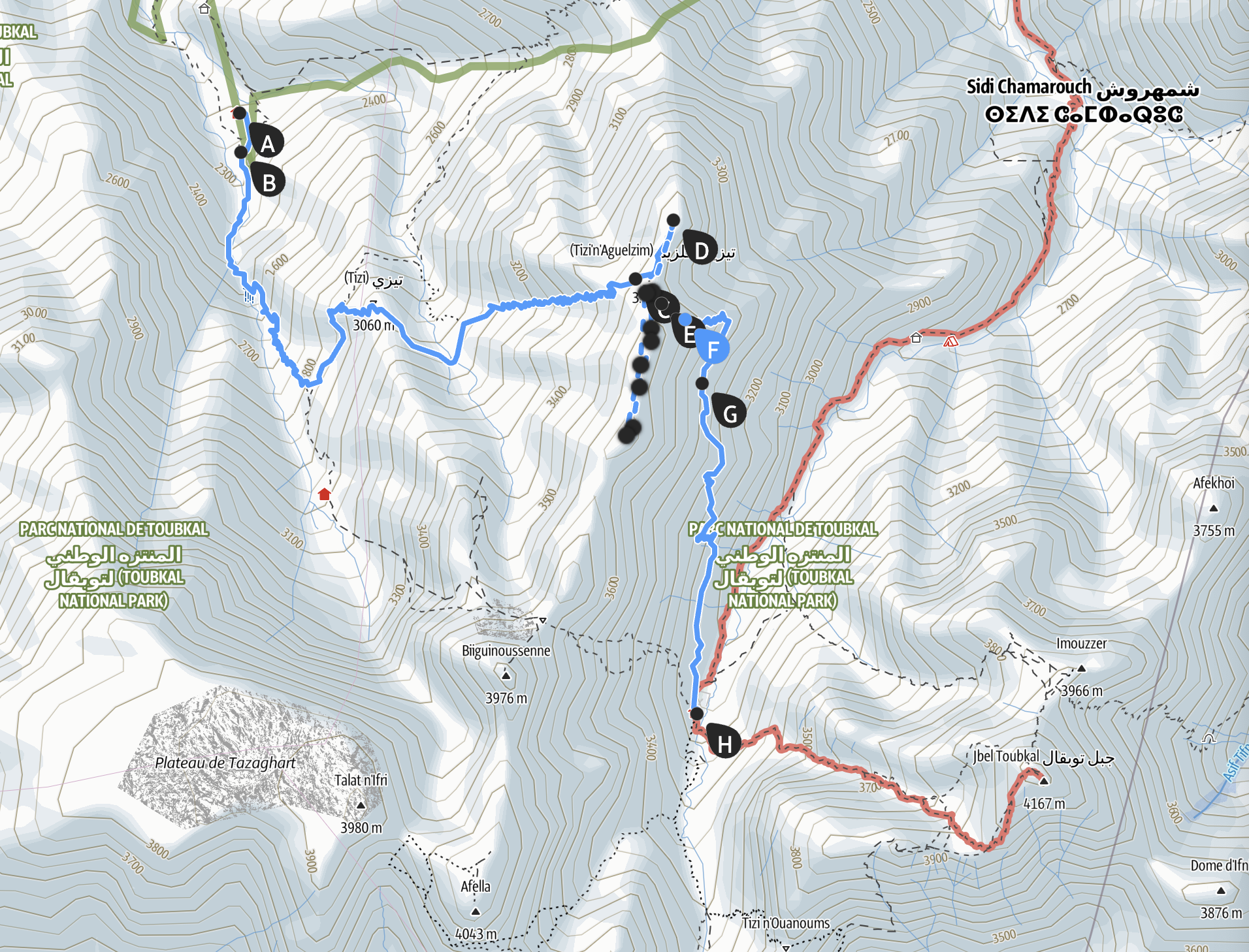
From Lepiney we climb through long zigzags and make our first summit of the trip, Aguelzim South (3,680m). A descent from the ridge leads us to the Mouflons hut, tucked in beneath the Toubkal massif. This becomes our base for the major peaks ahead.
14.1km (Di) 1533m (A) 582 (D)
-
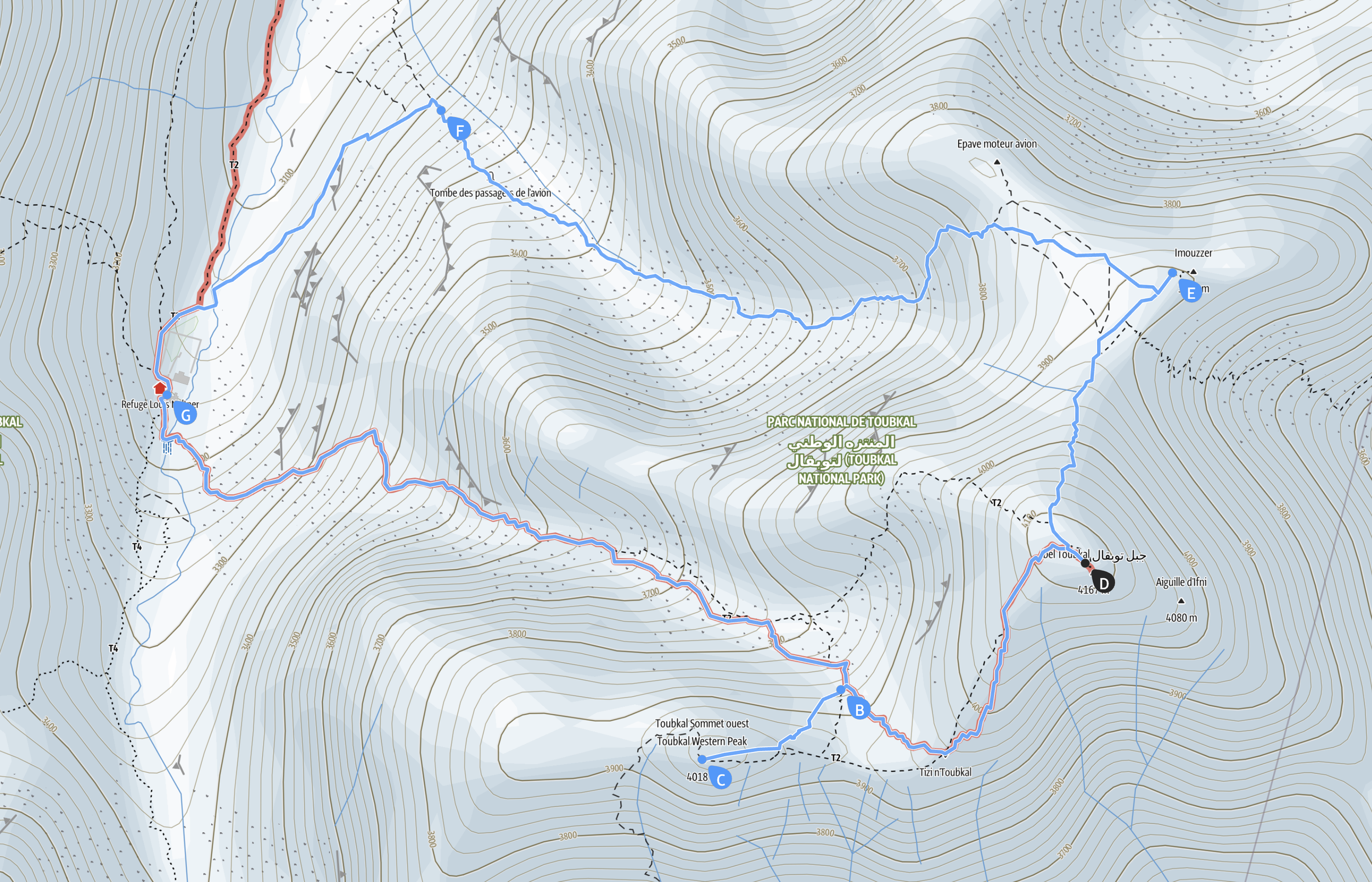
Today’s main goal is Toubkal, the highest mountain in North Africa. We aim to complete a circular ascent, climbing via the North Cwm and descending by the South Cwm (or vice versa), which gives a varied and more rewarding route than the standard in-and-out. From the summit plateau the views stretch across the High Atlas and out towards the Sahara. For those with energy to spare, two further 4,000-metre peaks – Western Toubkal (4,030m) and Imouzzer (4,010m) – can be added to the day.
These optional extras are excellent add-ons, while local support ensures flexibility: whether you choose to take on the additional summits or return directly to the hut, the day is set up to work for everyone.
8.5km (Di) 1201m (A) 1201 (D)
-
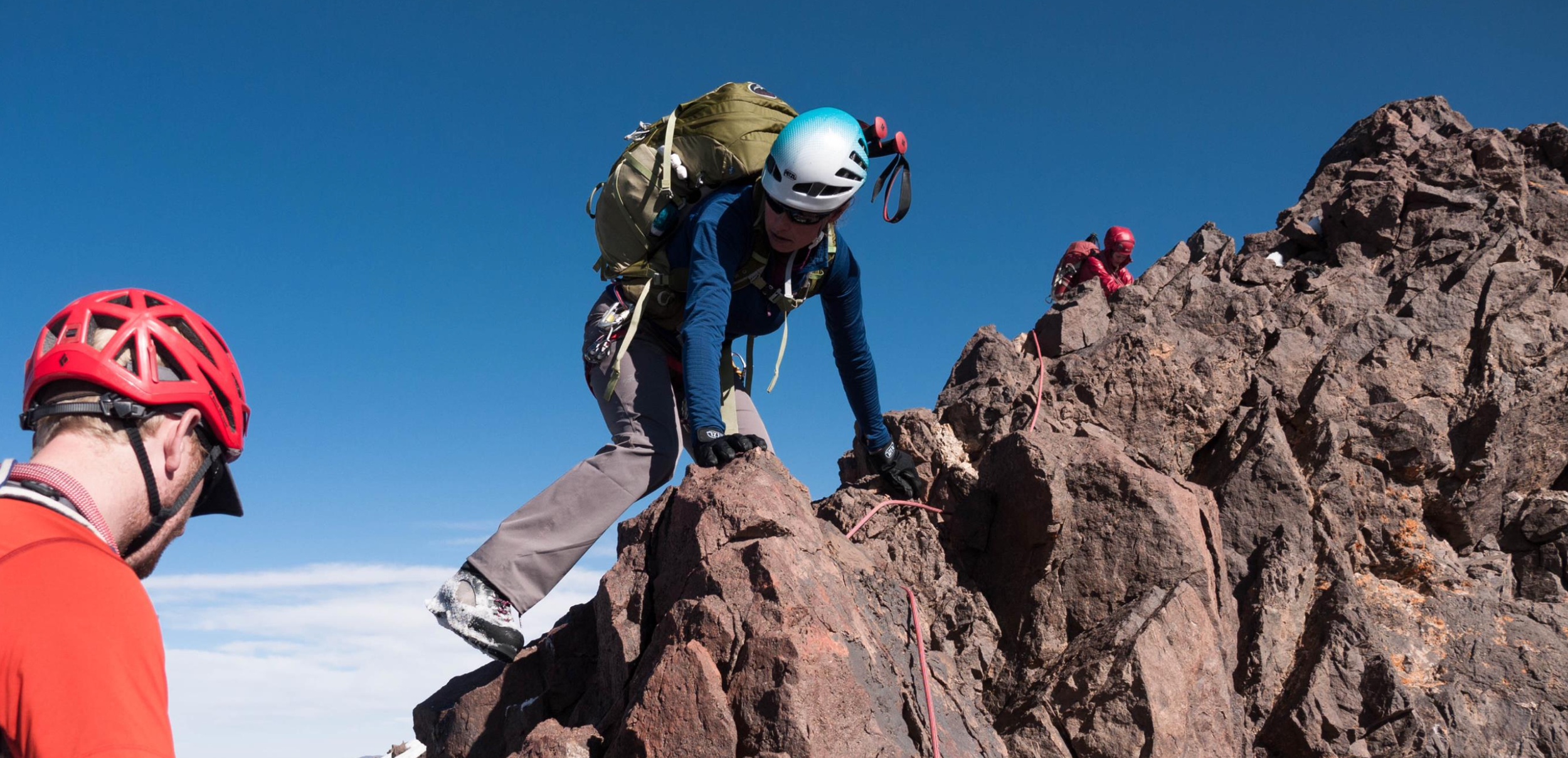
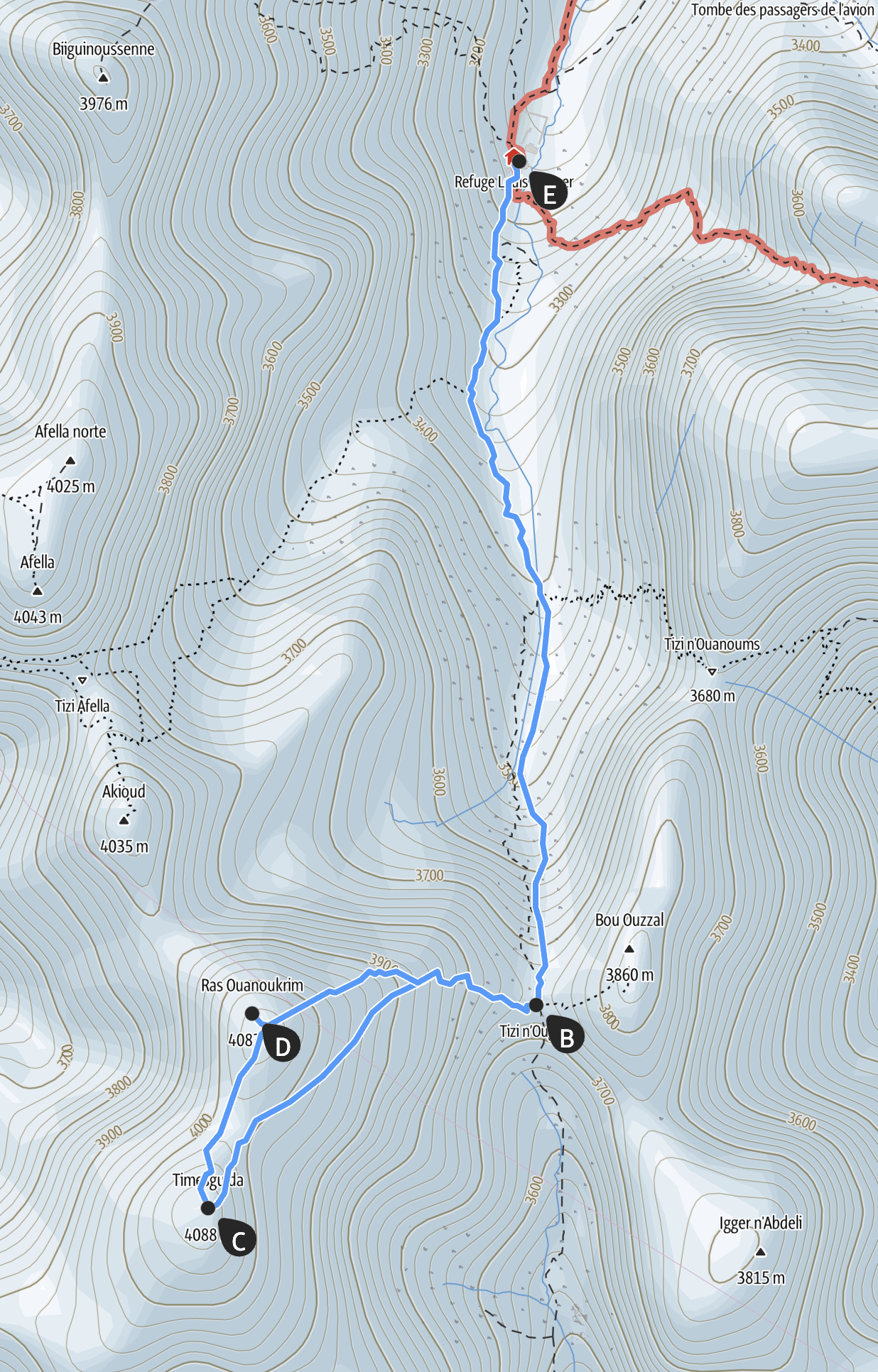
Today we take on a pair of linked 4,000-metre summits. The route involves sections of technical scrambling, which may be tackled roped or unroped depending on conditions and the team’s experience. This gives the day a more adventurous feel, with varied ground and long ridgelines opening to expansive views. As before, there is built-in flexibility. Those who prefer a shorter outing can climb with the summit group as far as the saddle before the scrambling begins, then descend by an alternative route in the company of local guides. For the summit team, reaching both Ras and Timesguida is a rewarding high-mountain day and a quieter experience than Toubkal.
8.4km (Di) 979m (A) 979m (D)
-
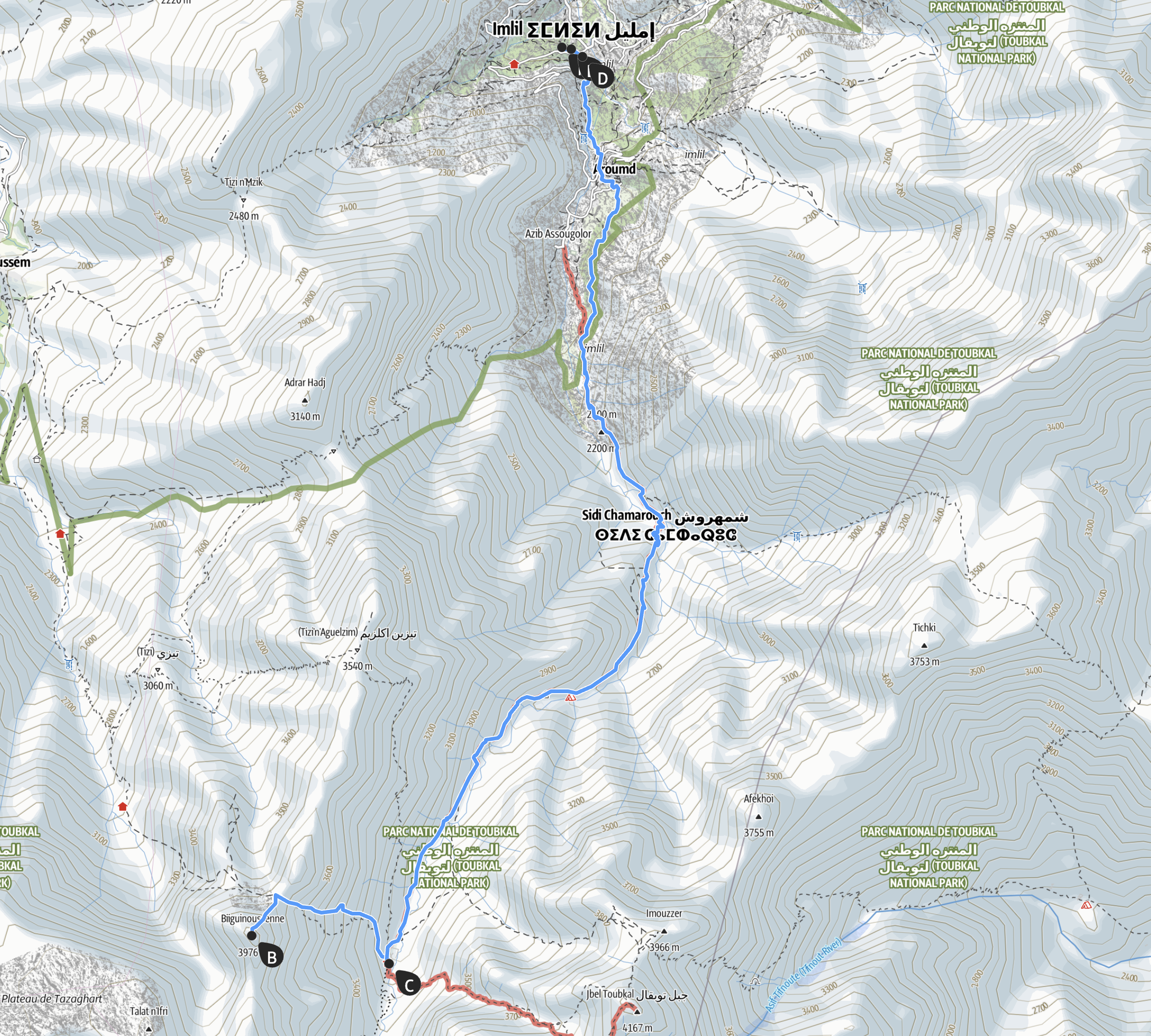
Our final 4,000-metre peak. A shorter but satisfying climb with a fine ridge to complete the sequence of summits. With three big mountain days in succession, the value of the acclimatisation route shows here. We then descend into the valley to enjoy our last night in Imlil.
14.5 (Di) 909m (A) 2322 (D)
-
After breakfast we transfer to Marrakech and either flights home or extended stay. (Jamie + ED will leave very early this morning but Robin and Steve will be on the transfer with you).
High Atlas 4000m Summits Kit List
The checklist below should help you pack for the trip. As a general rule, keep the weight of your kit to a minimum while still bringing everything you need to stay safe and comfortable.
What to carry
This trek is fully supported by a team of mules who will transport your main baggage between huts.
You will only need to carry a light daypack during the day, which makes movement across the ridges much easier and more comfortable. A 35 litre rucksack is usually an ideal size, giving enough room for essential items such as water, food, camera, wet weather gear, spare layers, sunglasses and any personal items you want easy access to.
Please remember to leave enough space in your daypack for a small amount of group safety equipment and, at times, some scrambling equipment.
-
Ropes and Hardware
Group emergency and rescue equipment
-
Backpack – 35 to 45 litre alpine or climbing pack. This should be large enough to carry spare layers, food, water, sunglasses, camera, waterproofs, and scrambling kit when not in use. Your rucksack should have a waterproof liner.
Small bag – for travel clothes and any items not needed during the trek. This will be left at the start and transported to the end hotel.
Main duffle bag (20kgs max limit per person) – 100 litre or larger soft duffle bag for mule transport. This will carry your main baggage between camps. Please do not bring a hard suitcase, as soft luggage is much easier to load and secure on the mules.
-
Lightweight sleeping bag – rated to around 0°C comfort
Sleeping bag liner – silk preferred
(Both items can be rented from Nordur)
-
Trekking trousers or light softshell trousers
Shorts
Waterproof jacket
Waterproof overtrousers
Long johns or thermal leggings
Thermal baselayer tops – ideally 3 short sleeve and 1 long sleeve
Technical underwear – preferred, as it dries faster
Fleece or softshell jacket
Warm insulated jacket – synthetic or down
Sun hat
Warm hat
Sunglasses – Category 3 or 4
Lightweight thermal gloves
-
Scrambling boots – usually a lightweight B2-rated boot with ideally the climbing zone at the front of the boot. Please get in touch if you are unsure. Boots must be well broken-in before the trip.
Lightweight shoes, sandals or slippers for around hut
Technical walking socks – 4 pairs. A mix of thicknesses works well for summer conditions.
Spare boot laces
-
2 x 1 litre Nalgene-style bottles
Head torch with spare batteries – minimum 70 lumens
Walking poles – ideally ones that pack down small enough to attach securely to your rucksack without affecting movement
-
Please bring a small personal first aid and hygiene kit including:
Antiseptic cream
Throat lozenges
Diarrhoea treatment such as Imodium
Painkillers
Plasters
Blister treatment
Insect repellent
Rehydration salts such as Dioralyte
Sun cream – factor 50 minimum
Total block or high protection for lips, nose and other exposed areas
Wash bag and toiletries
Small towel
Antibacterial hand gel or hand wash – enough to use before every meal
-
Harness with gear loops
Climbing helmet
Belay plate, 120cm sling and HMS Krab
(All can be rented from Nordur)
-
Audiobooks, Kindle or podcasts for the evenings in camp
Camera and spare batteries
Penknife
Power bank – an Anker-style power pack is a good lightweight option and will charge a phone several times
-
Before the start of day one, we will repack any equipment not needed during the trek into the spare small bags. These bags will then be transported to the hotel at the end of the trip.
All sleeping kit and other equipment not needed during the day will be transported between camps, allowing us to move more freely and enjoy the ridge.
-
Your main baggage will be transported between camps by mules. This should be packed in a soft duffle bag or holdall, rather than a hard suitcase. Soft luggage is much easier to load, carry in this environment and much less likely to cause injury to the mules.
The detail
Cost per person £1345 (£50 increase for upgrade to final night in Imlil to celebrate
Inclusions
All Meals - Day 1 Dinner through to Day 7 Breakfast
All Transfers (Airport -Ouirgane, Imlil to airport)
Group Safety kit (Ropes, climbing hardware, group shelters, first aid kits, emergency comms)
Guiding through-out Nordur guides and local guides.
Exclusions
Flights and transfer to UK airport
Insurance
Anything not stated in Inclusions
Personal equipment