Femundsmarka Itinerary & Logistics
The Overview
Femundsmarka is not a crossing on marked winter trails. There are no willow sticks, no prepared tracks, and no fixed line through the landscape.
For this group, the crossing also forms a first polar training course. The aim is to give you the basic knowledge and expedition habits needed to get started in polar travel, and to build towards bigger objectives later such as Hardangervidda, Svalbard, Greenland, and the polar regions. Across the journey we will cover the core skills that underpin safe and efficient polar travel: cross-country ski movement and load carrying, campcraft, emergency shelters, crevasse rescue, avalanche emergency procedures, ice thickness assessment, lake crossing procedures, snowpack analysis, and ice fishing.
The route travels through forest, over open ground, and across the border between Norway and Sweden. This is a landscape shaped by reindeer movement and by the long-standing seasonal use of the land by Sámi communities. It is also an area where you may see, or find signs of, reindeer, moose, beaver, otter, bear and wolverine. In the far north of the park there is also a small musk ox population.
You should expect to finish the course with tired legs, a full head, and a clear understanding of the stepping stones needed to achieve that.
The Itinerary
-
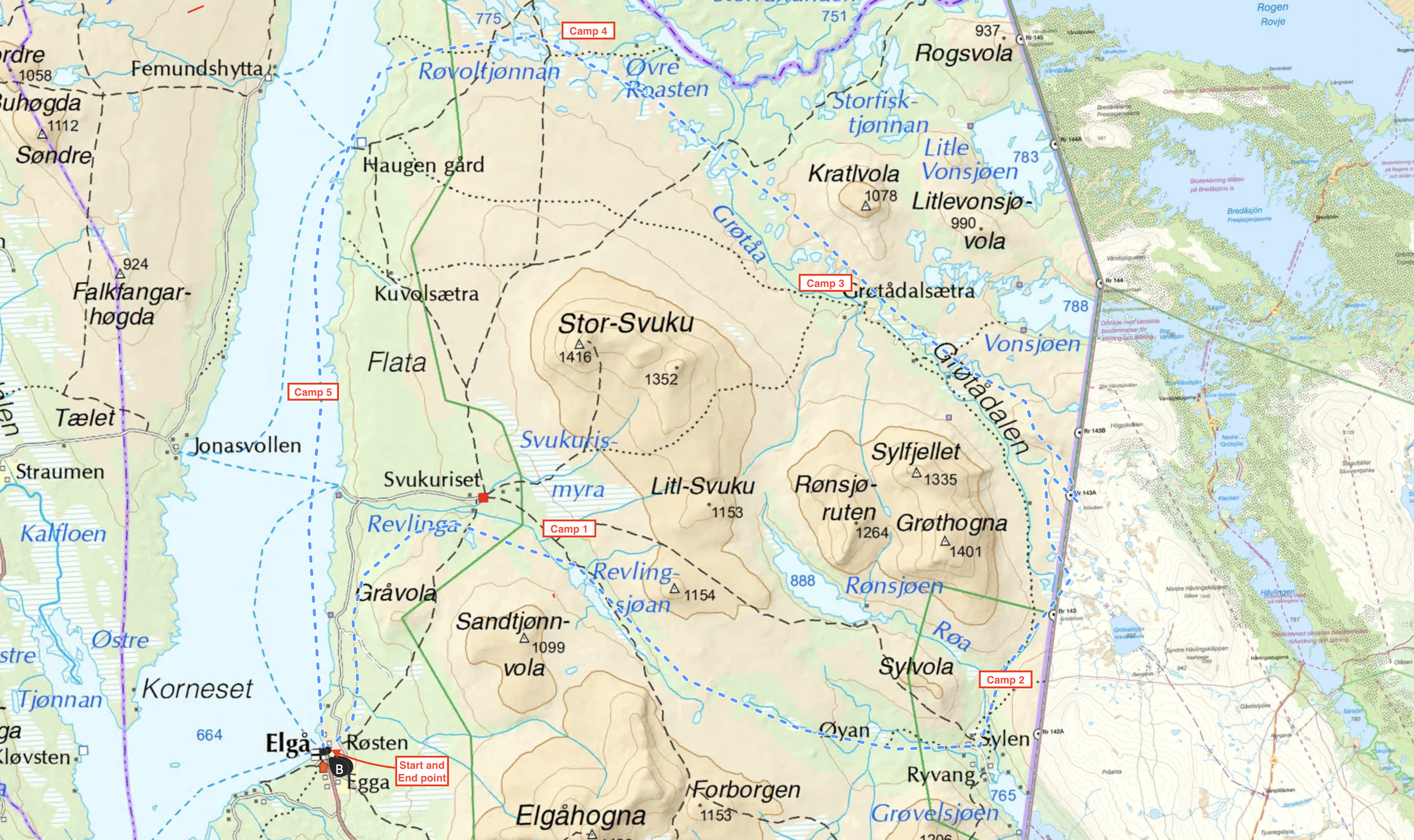
Meet @ the Anker hotel in Oslo at 12:00(we will be about earlier in the morning so earlier the better). We load the vehicles and drive north-east towards the Swedish border and into Femundsmarka National Park, finishing at the end of the road in the small settlement of Elgå. We organise kit, pack pulks, look at load distribution and clothing systems, and set off into the hills for our first night out. The first evening is a chance to settle into camp routine, stove use, tent systems, and the basics of working efficiently in cold conditions.
-
We travel around the western flanks of Gråvola into the Revlingsjøan valley, below the summit of Revlingkletten. The day focuses on the foundations of polar travel: movement on skis with a loaded pulk, pacing and efficiency, layering and temperature management, and building good habits through the day. In camp we continue with tent craft, stove management, snow anchoring, and general systems for living well in winter.
-
We continue east, crossing into Sweden and moving through the Brunsdalsbekken area towards the slopes beneath Høgpiken. Through the day we cover avalanche emergency procedures, transceiver use, probing and shovelling, group response, and how these fit into wider journey decision-making. We also continue to build confidence in movement, camp routine, and general expedition management.
-
We cross the open plateau of Kratstjønnan, threading a route through more than thirty small frozen lakes. This is a good setting to look at snowpack analysis in more detail, digging and interpreting the snowpack, and discussing how that feeds into decisions on terrain and travel. We also aim to cover emergency shelters and snow shelter construction. If conditions allow, there may be time for ice fishing.
-
We move towards the frozen expanse of Femunden lake, watching for wildlife and preparing for lake travel. The focus is on ice thickness assessment, lake crossing procedures, identifying hazards, and building a clear process for judging when and how to travel on frozen water. We continue refining camp systems and expedition habits, with time for ice fishing if conditions allow.
-
An early start as we push south down the length of Femunden towards Elgå. This final day brings the course together in a practical way, using the systems covered through the week: movement on skis, pulk management, lake travel, cold management, and general expedition decisionmaking. We aim to arrive back at the vehicles early afternoon, then transfer south to Oslo to the Anker hotel, a well needed shower and for a final meal before departure the following day.
-
Femundsmarka Kit List
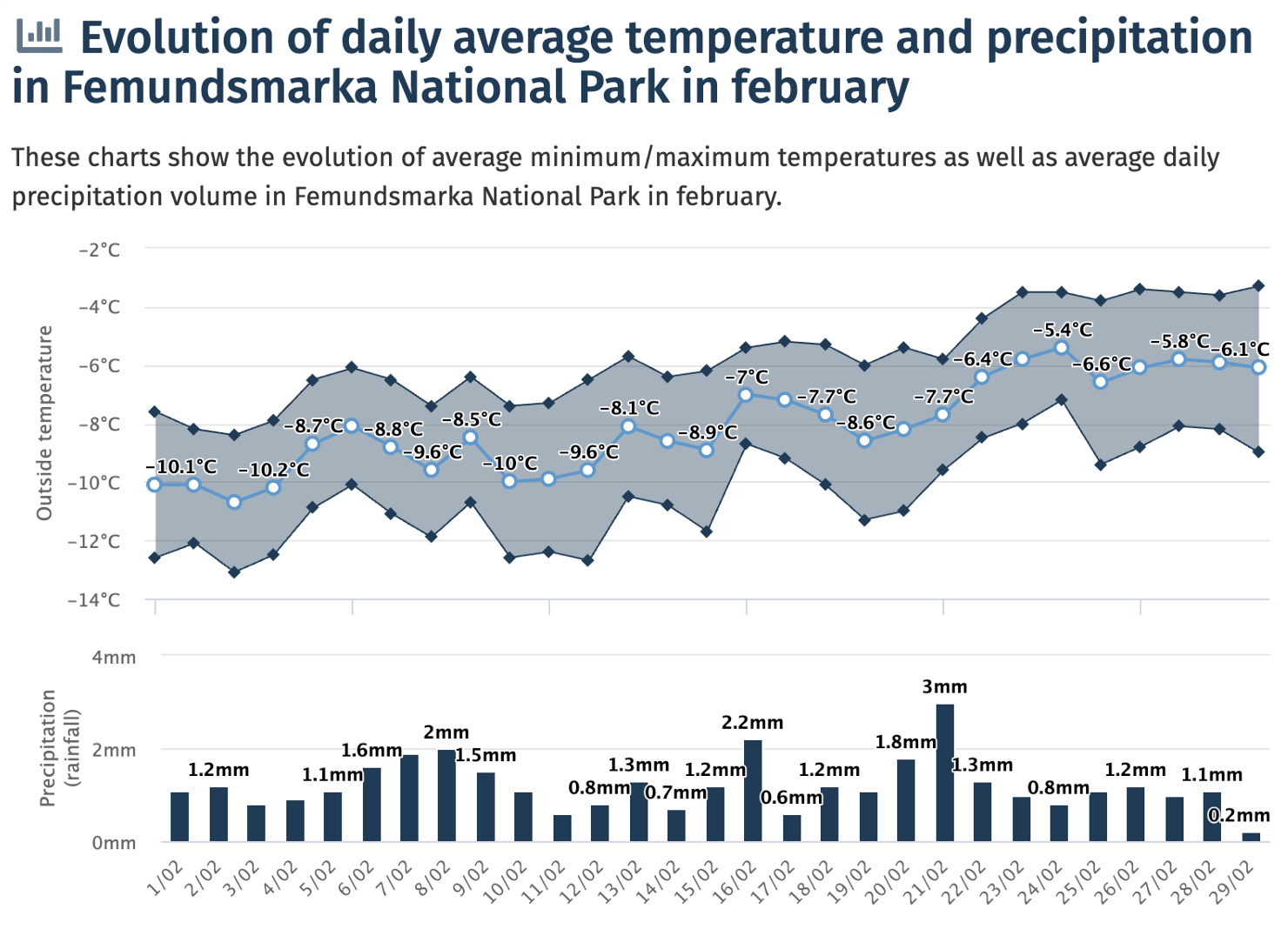
Femundsmarka in early February is a cold winter environment, with short daylight hours and the potential for very low temperatures. This kit list is designed for multi-day Nordic ski travel with pulks, tents, and stove-based camping.
Every item on this list plays an important role in the safety and smooth running of the expedition. Good kit, packed well, helps you stay warm, manage yourself properly, and function efficiently in cold conditions.
Nordur provides the main group expedition equipment, including tents, pulks, stoves, fuel, group safety equipment, communications, and first aid kit. You are responsible for your personal clothing, sleeping system, eating kit, and other items listed below.
Any items available to rent through Nordur are underlined and marked with a star. Rental prices can be found in the bottom right-hand side of the drop-down menu for each relevant item.
We will go through all kit on arrival and complete a final kit check before departing.
-
Pulke, Harness, pulk duffel and rigid or roped system.
Avalanche Transceiver and batteries.
Snow shovel.
Avalanche Probe.
Hilleberg Keron 3 gt polar tent with snow pegs (per tent team)
MSR XGK liquid expedition Stove , Artic pump, flint and steel, windproof matches, maintenance kit and fuel.
Heat mat stove platform system
Tent brush
-
Windproof and waterproof over-mittens/Gloves (medium weight) - £20
Windproof and waterproof over-mittens/Gloves (heavy weight) £30
Heavy Down filled jacket - £50
4 season sleeping bag sleeping bag and liner (rated to minimum -15 comfort rating) includes 35l orlieb heavy duty drybag. - £60
Full-Length Mat/Thermarest - £30
Cross country skiing setup - Boots, Skis, skins and poles with snow baskets - £120
Arctic Bedding bag - £30
-
* 4 season sleeping bag sleeping bag and liner (rated to minimum -15 comfort rating.)
* Full-Length Mat/Thermarest (Neo air or Exped equivalent would be ideal - this will be vital for keeping you
warm at night as we will be sleeping on the snow.)1 litre Thermos Flask + 2 Litre drinking bottle, (Nalgene etc) camping mug and 2 sporks (preferably the
titanium ones that don’t snap in the cold.)Head torch (new batteries) and 3 x spare batteries this must be bright enough for you to walk comfortably
for several hours in the dark.Basic First Aid Kit including: antiseptic cream, throat lozenges, diarrhoea treatment (Imodium), painkillers,
plasters and blister treatment, and rehydration salts (Dioralyte), antibacterial hand wash.Sun protection factor 30 minimum (including total bloc for lips Factor 50 minimum)
Wash bag/toiletries & small towel ( Keep this to bare minimum - face wipes are ideal for washing)
“Pee Bottle” (one of the Nalgene bottles above will be used for this preferably a red one, with tape som you can feel its not your drinking bottle in the dark)
Book/Kindle & IPod/Music player
* Cross country skiing setup/Snowshoe - Boots, Skis, skins and poles with snow baskets.
Gaiters (unless integral to your boots)
-
Technical walking socks 2/3 pairs (variety is key - liners, light hikers, summit socks for specific conditions)
Slippers (for use in the tents) down or synthetic hut booties are ideal. (not essential you can just use a thick pair of socks)
Synthetic or fleece Gilet
100g fleece ideally with hood
Softshell jacket with hood or light synthetic/down
Winter walking trousers soft shells or salopettes.
Long johns (thermal full length underwear) & thermal base layer shirts (2 short sleeve, 1 long sleeve)
* Heavy Down filled jacket or very heavyweight synthetic jacket.
Waterproof jacket with hood and waterproof over-trousers (Must have full length zip)
Sunhat & warm hat.Balaclava or facemask (Balaclava is essential.
A buff could be used instead of a face mask, providing this is a system that has been used and worked for you before.)
Eyewear- ski goggles and sunglasses (Category 3/4) both will be required.
Lightweight thermal gloves (Rab Powerstretch)
* Windproof and waterproof over-mittens/Gloves (Medium weight)
* Waterproof mittens/gloves (Heavy weight) if in doubt go warmer.
The detail
Cost per person £2095
Inclusions
All Meals - Day 1 Dinner through to Day 6 Lunch
All in country transfers
Equipment – Pulk system, Tent system, stove system, group safety/comms equipment
Polar/Arctic guide (Jamie the director + another if numbers require)
1 night hotel 5 nights tents.
Exclusions
Flights and transfer to UK airport
Insurance
Anything not stated in Inclusions
Personal equipment