The Tracks
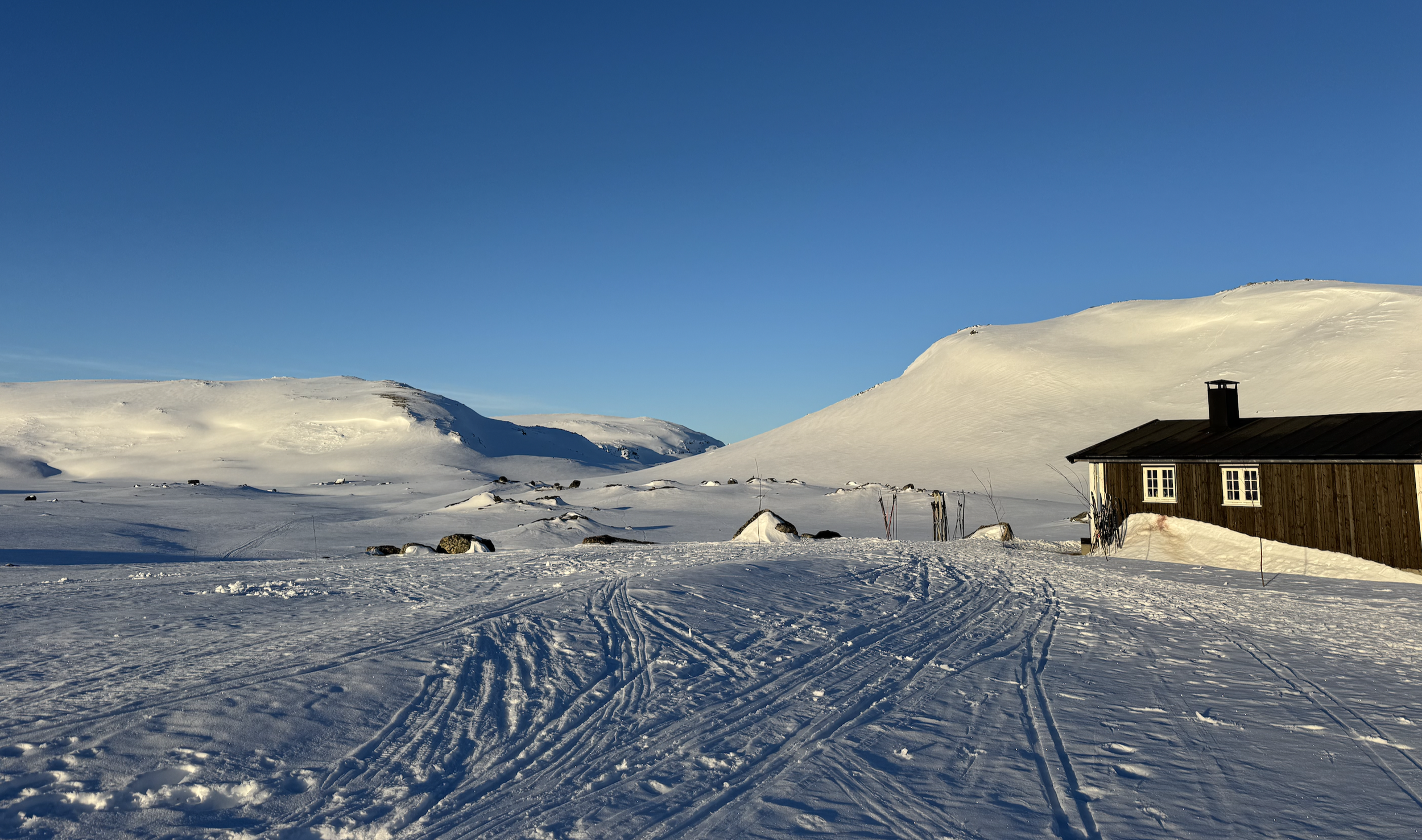
In the Scandinavian winter, three types of tracks are encountered:
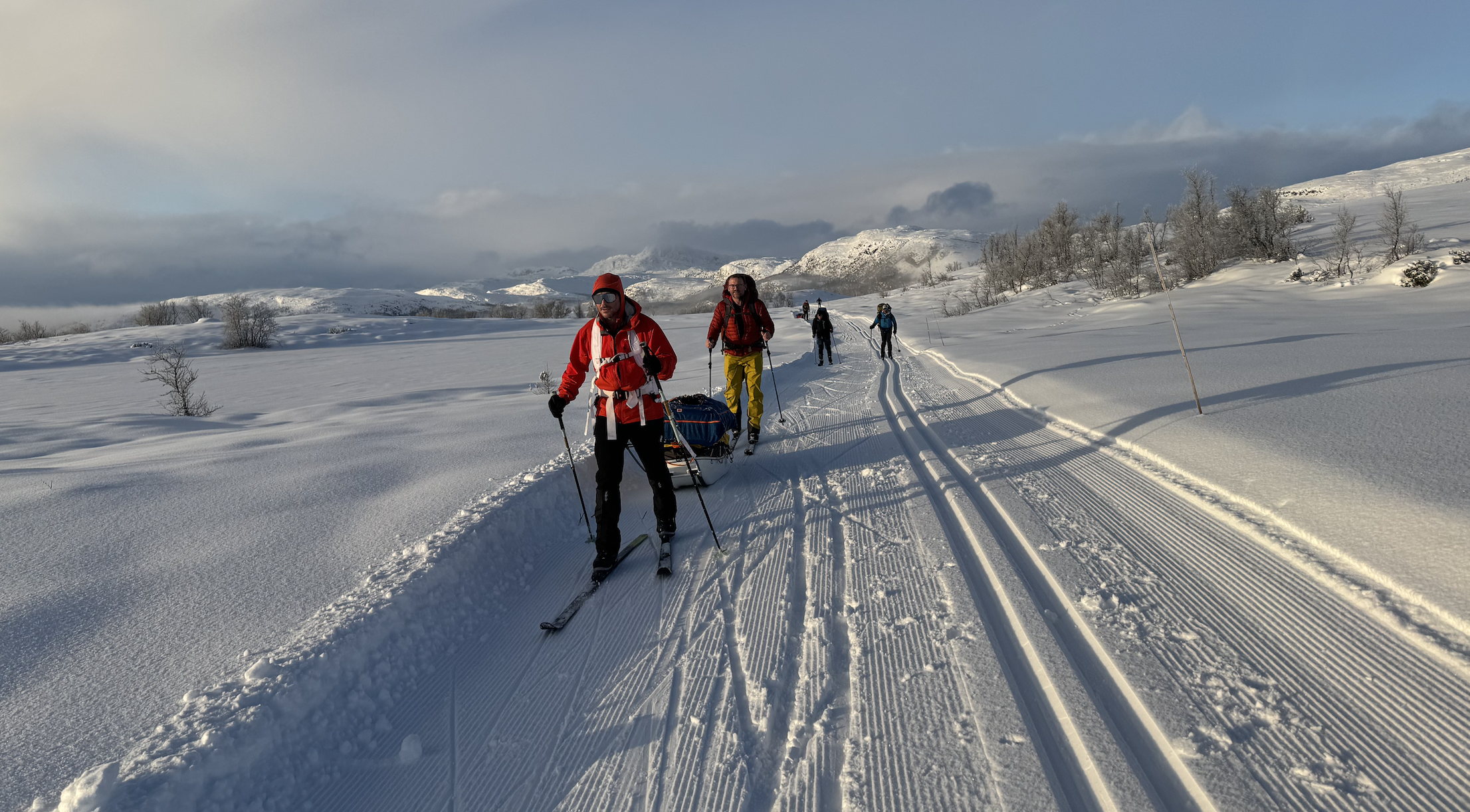
Pisted: Shown on map as hard blue line, these are professional, prepared tracks on the map, including a classic track (two grooves) and a flat section for skate skiing or pulling a pulk.
Marked Winter Trail: Shown on map as dotted blue line, these are established routes marked by professional guides with tree branches every 10 meters to ensure the path avoids avalanche-prone terrain.
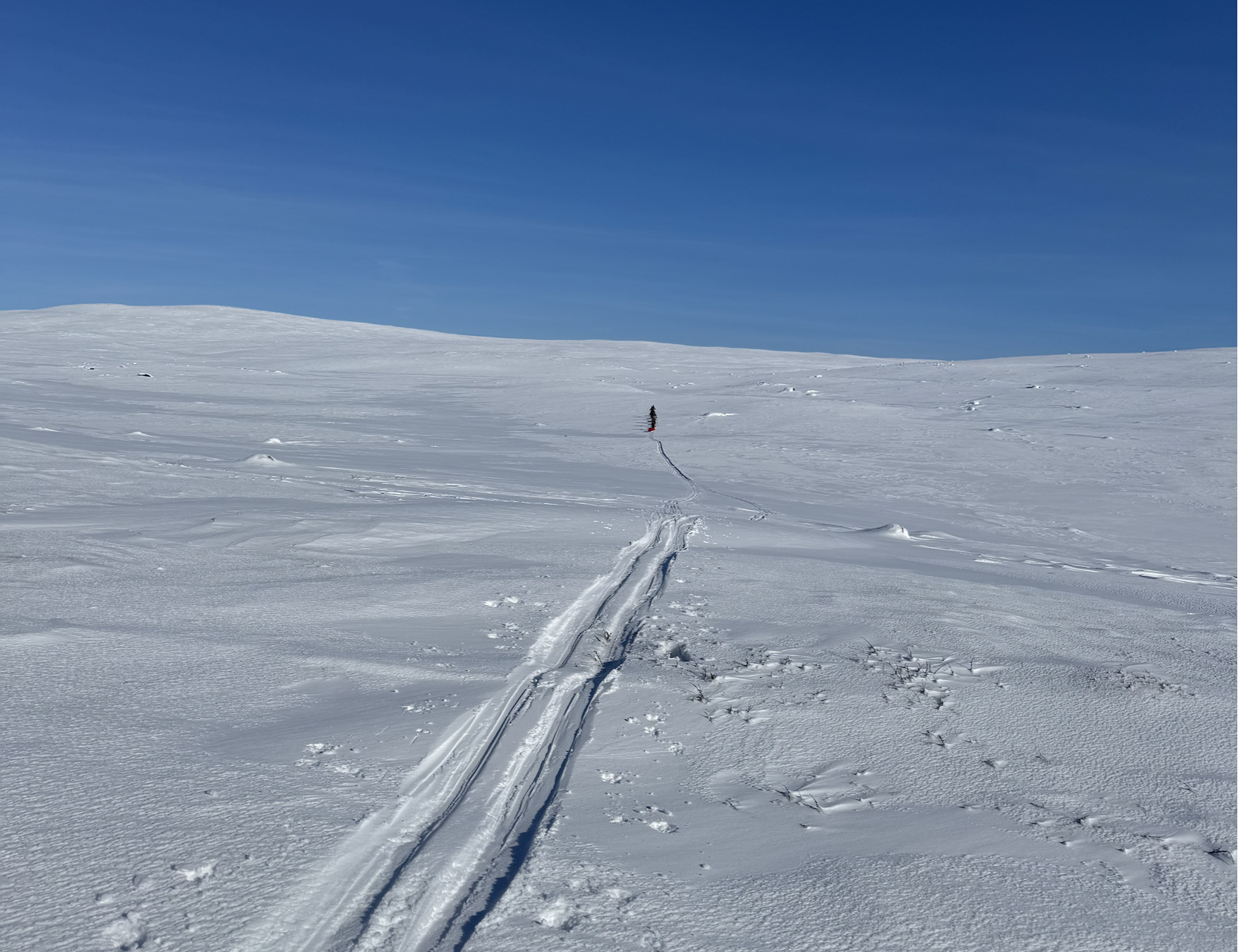
Off Tracks: Areas where you forge your own path.
During the course, movement primarily occurs on marked winter trails or off tracks, depending on the ground conditions and other factors. The daily distance covered is targeted at approximately 15 kilometers, which is a significant distance considering the comprehensive learning and skills development integrated throughout the day.
The DNT Hut System and Why We Still Travel Self-Supported
Norway has one of the best mountain hut systems in the world. The DNT network gives access to staffed lodges, self-service huts and no-service huts across huge areas of mountain terrain. We have used them a lot over the years, and they are a brilliant part of Norwegian outdoor culture.
The three main types of DNT hut are:
Staffed lodges — larger huts, usually open in season, often with meals, drying rooms, showers and a more comfortable lodge-style feel.
Self-service huts — unlocked with the DNT key, usually stocked with bunks, blankets or duvets, firewood, cooking equipment and a simple food store. You record what you use and pay afterwards.
No-service huts — more basic shelters with sleeping space and simple facilities, but usually no food supplies. You need to carry what you need and check the hut details before relying on them.
For some journeys, the hut system works really well. For the style of winter expedition we run, it often does not give us what we are looking for.
On many of our routes, the huts are spaced around 20–25 km apart. In winter, with pulks, poor visibility, wind, soft snow or a tired team, that distance can start to dictate the whole journey. It removes flexibility. You are no longer stopping where the conditions, the group and the day naturally lead you; you are trying to reach a fixed building.
The growing popularity of the huts also changes the experience. After a hard day moving through the mountains, there is something strange about arriving into a busy hut, queueing for space, and sitting down to a three-course meal and a beer. There is nothing wrong with that — but it is not always the expedition experience we are after.
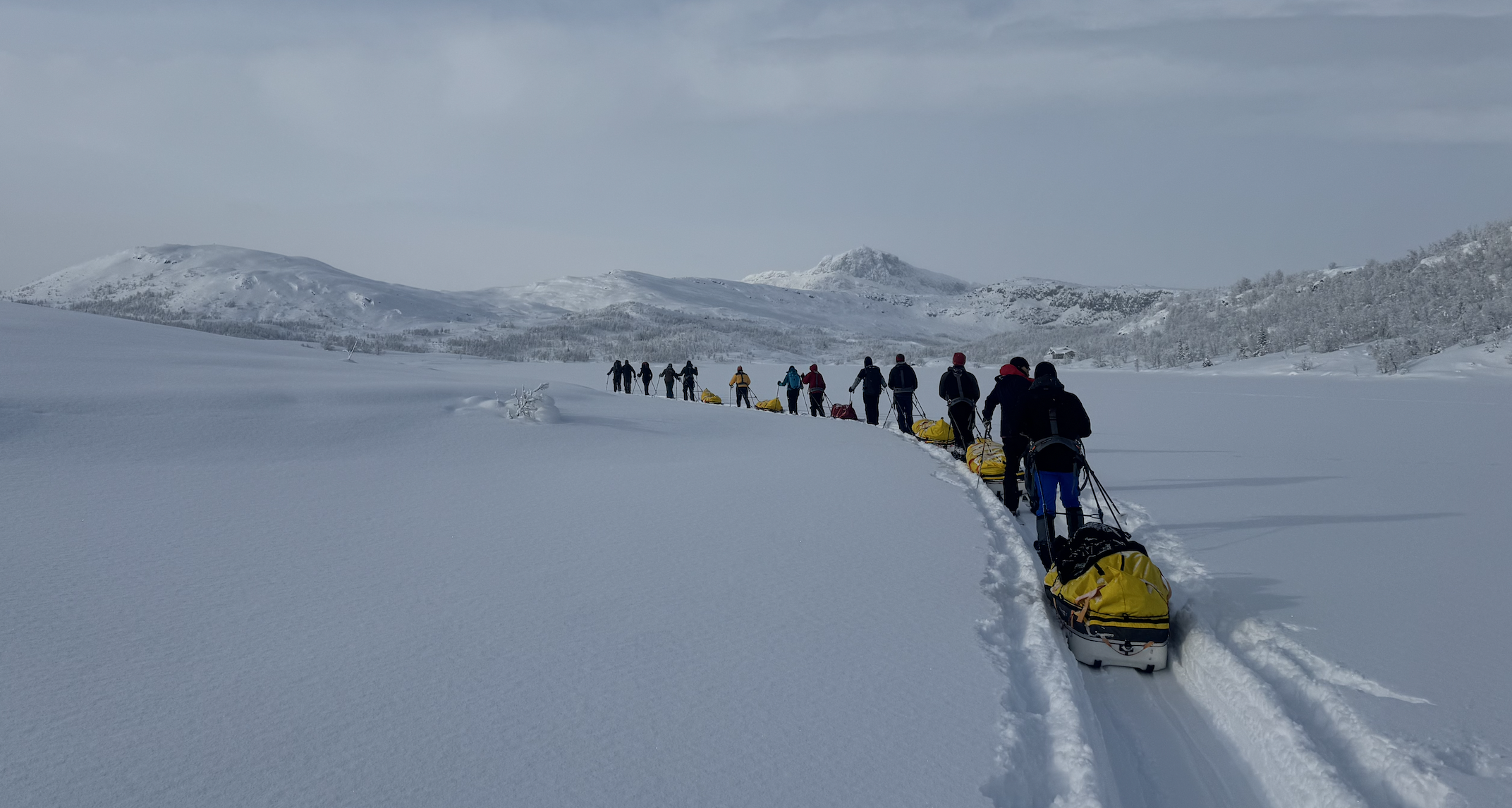
We prefer the flexibility and simplicity of travelling self-supported. We can stop where it makes sense, pitch the tents, get the stoves running, rip open a ration pack, and settle into the small routines of camp. There is a particular satisfaction in being completely self-contained: carrying what you need, managing your own systems, and moving through the landscape without being tied to buildings.
It also makes the return to civilisation feel far more significant. A shower, proper food, clean clothes and a warm room all feel different after several days of genuinely looking after yourself. That contrast is part of the reason we do it.
The huts are useful, and we still value them. But for our winter crossings, the aim is usually something more nomadic, more flexible and more self-reliant. That is where the real reset comes from.
If you are interested in a very tough expedition hut to hut why not join us on our Massiv crossing - 350kms Hut-Hut