
Polar Training- Beitostølen
A True Introduction to Polar/Arctic Travel
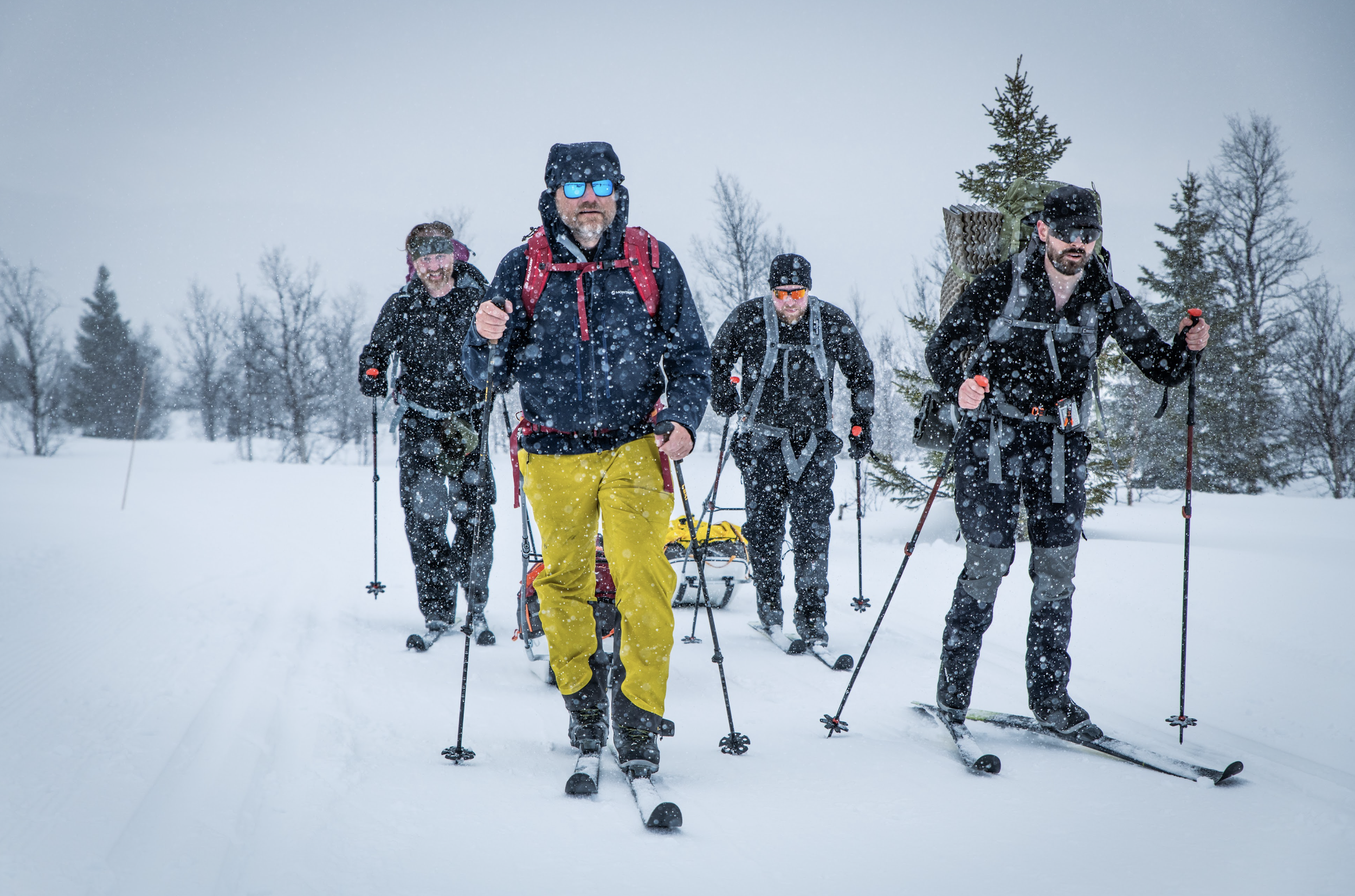
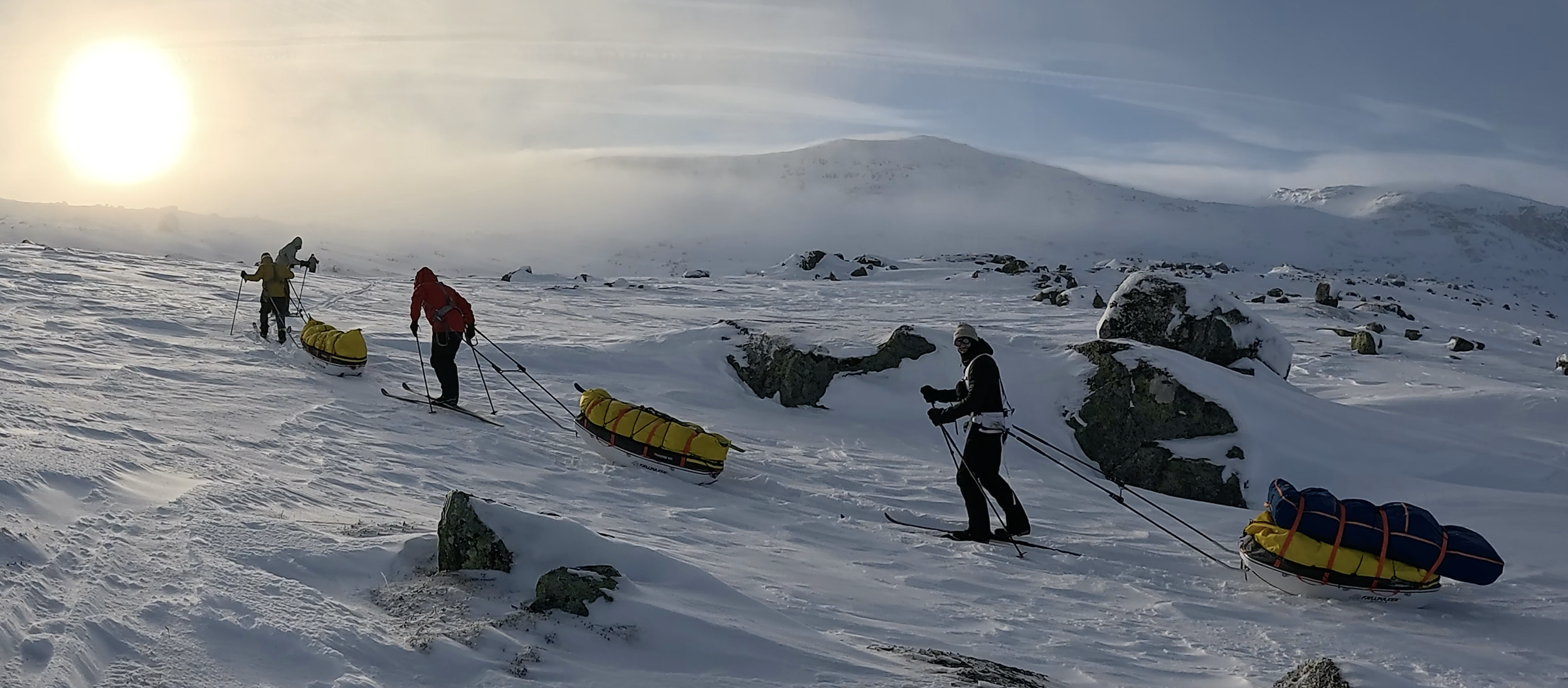
Snow crunches underfoot and the low winter sun hangs above the frozen valleys of Huldreheimen. This crossing offers a true introduction to polar travel—immersive, practical, and coached in real conditions. Participants learn by doing: skiing with pulks, navigating undulating terrain, and managing winter camp systems efficiently. Designed as a fast track into Arctic expeditions, the journey combines expert instruction with the challenge of living and travelling in snow-covered mountains. Huldreheimen’s remote huts and varied terrain make it the ideal environment to build confidence, refine technique, and develop the essential skills for future polar and winter expeditions.
Learn the Essential Skills for Arctic & Polar Expeditions
The Crossing Highlights
COST : £1295
DAYS: 6
LEVEL: 1
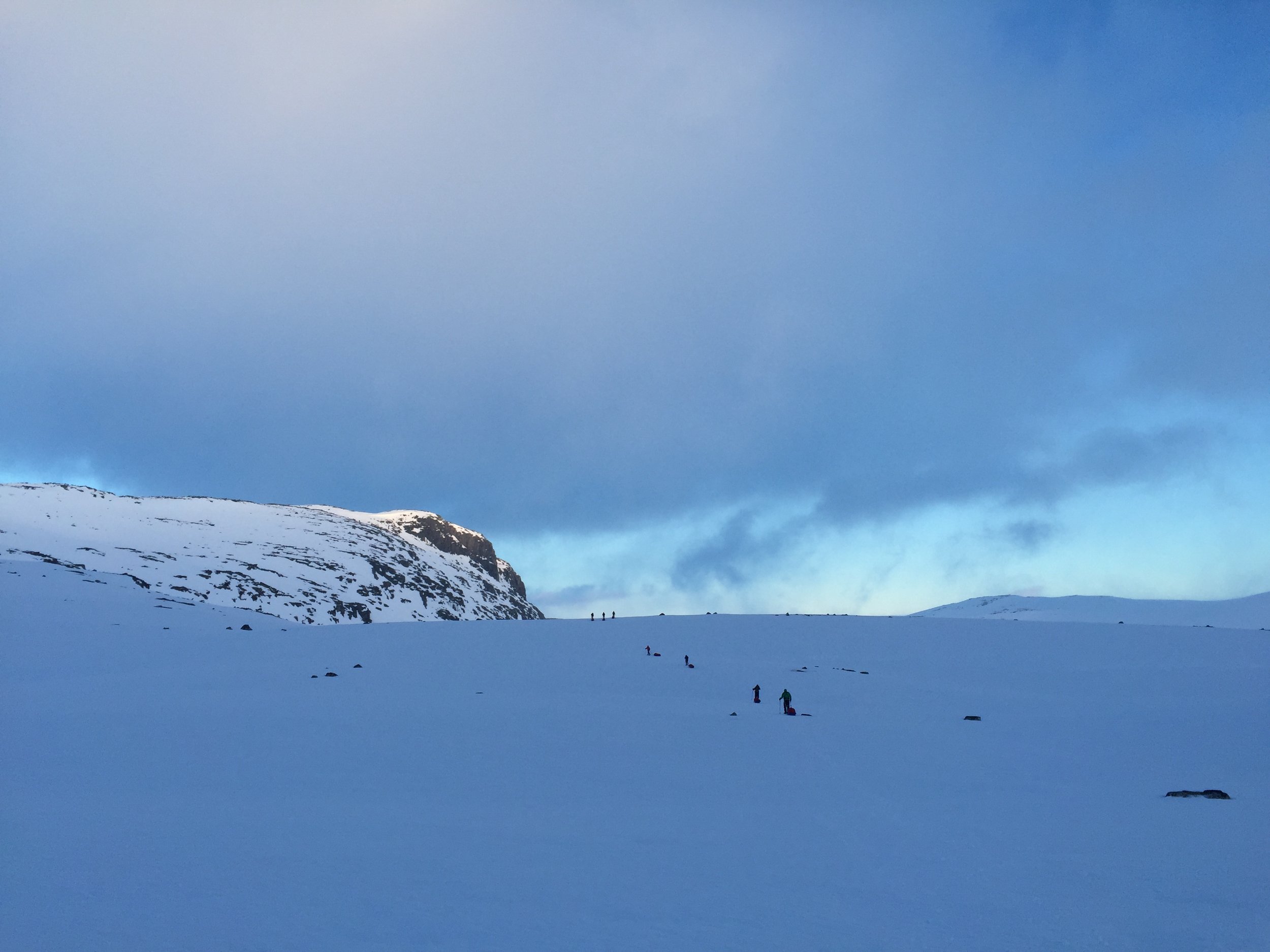
Full Immersion in Polar Travel – Hands-on training in real Arctic conditions, learning by doing. Covering nearly 60kms across a frozen plateau!

Essential Safety & Rescue Skills – Avalanche awareness, frozen lake crossing, transceiver searches, and self-rescue.

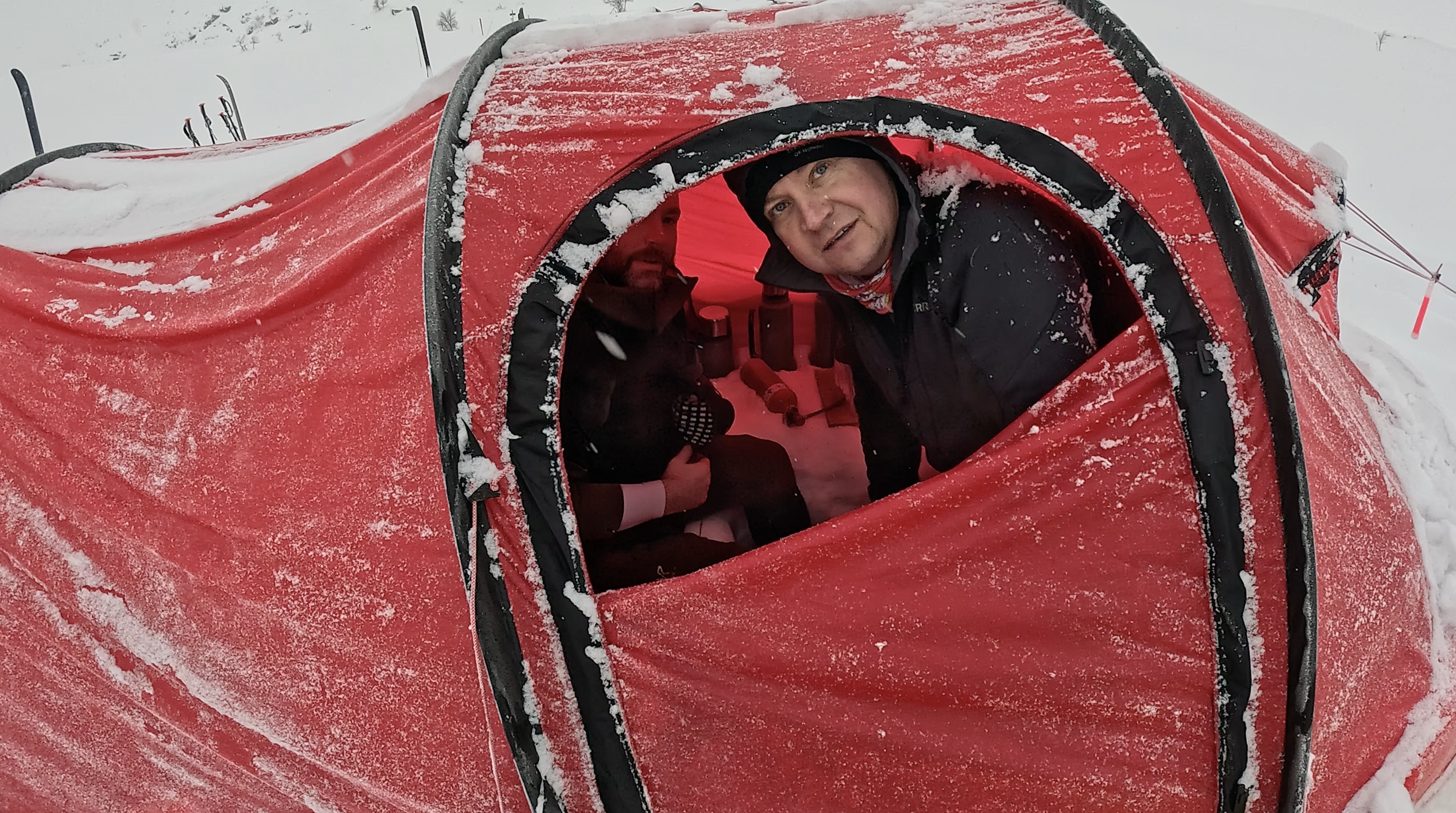
Cold-Weather Camping & Expedition Living – Tent setup, snow cave building, stove use, and survival techniques.

Develop Winter Travel & Navigation Skills – Off-track skiing, snowshoeing, pulk hauling, and whiteout navigation.

Expedition Logistics & Emergency Preparedness – Load carrying, field repairs, winter first aid, and hut-to-hut travel.

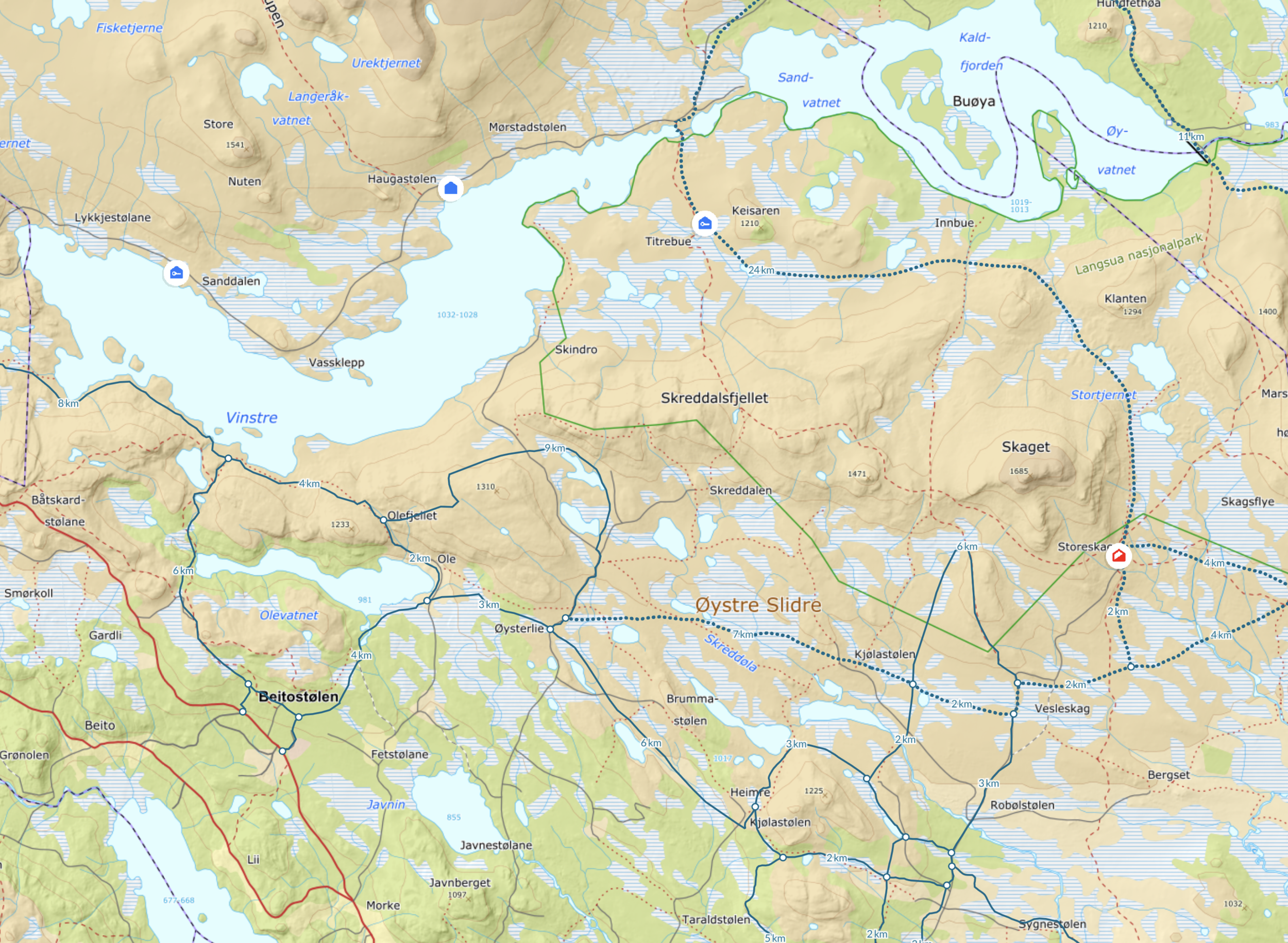
Below is a map of the area we will be journeying through!
Your Polar Training Expedition Itinerary
Day 1 – Arrival, briefing, and expedition preparation
Arrive into Oslo and make your way to the Anker Hotel. We meet at 17:00 for a full briefing. Staying here on Day 1 and Day 5 keeps things simple and avoids unnecessary faff moving kit around the city.
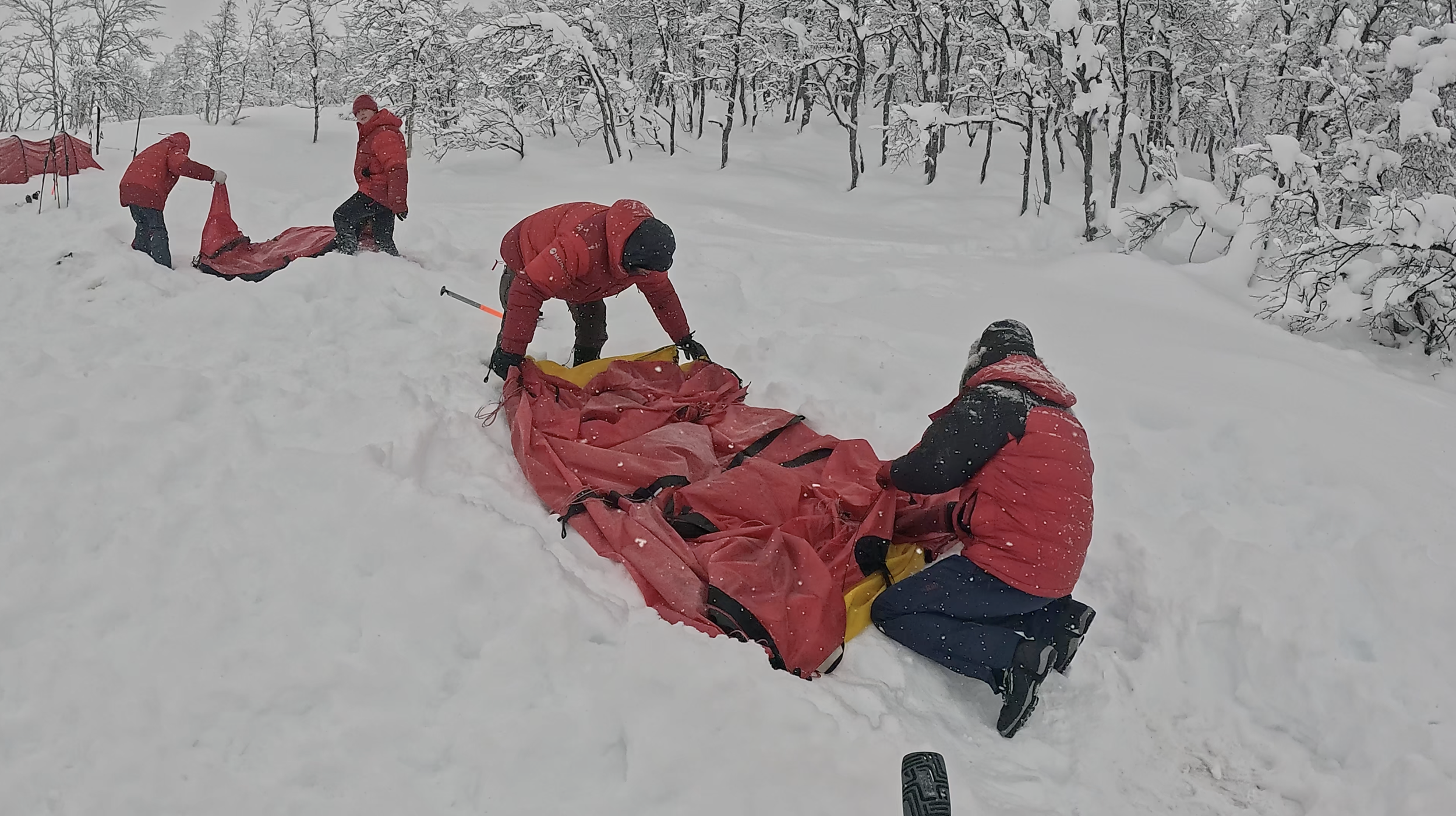
The evening is about getting properly set up for the week ahead. We go through equipment in detail, make any adjustments needed, and spend time on stove systems—fuel management, lighting, and how to use them safely in a tent environment.
We’ll also talk through the plan for the week, what you want to get out of it, and how we’ll operate as a team. You’ll pack your pulk fully for the first time, thinking about what needs to stay accessible and how to keep systems efficient in the cold.
Early night—tomorrow starts properly.
Day 2 – Foundations: skis, systems, and first camp
It’s an early start. We move pulks across Oslo by tram, then take the bus up into the mountains at Beitostølen. From the end of the road, we step straight onto the snow.
Day 2 is about building solid foundations before terrain becomes more complex.
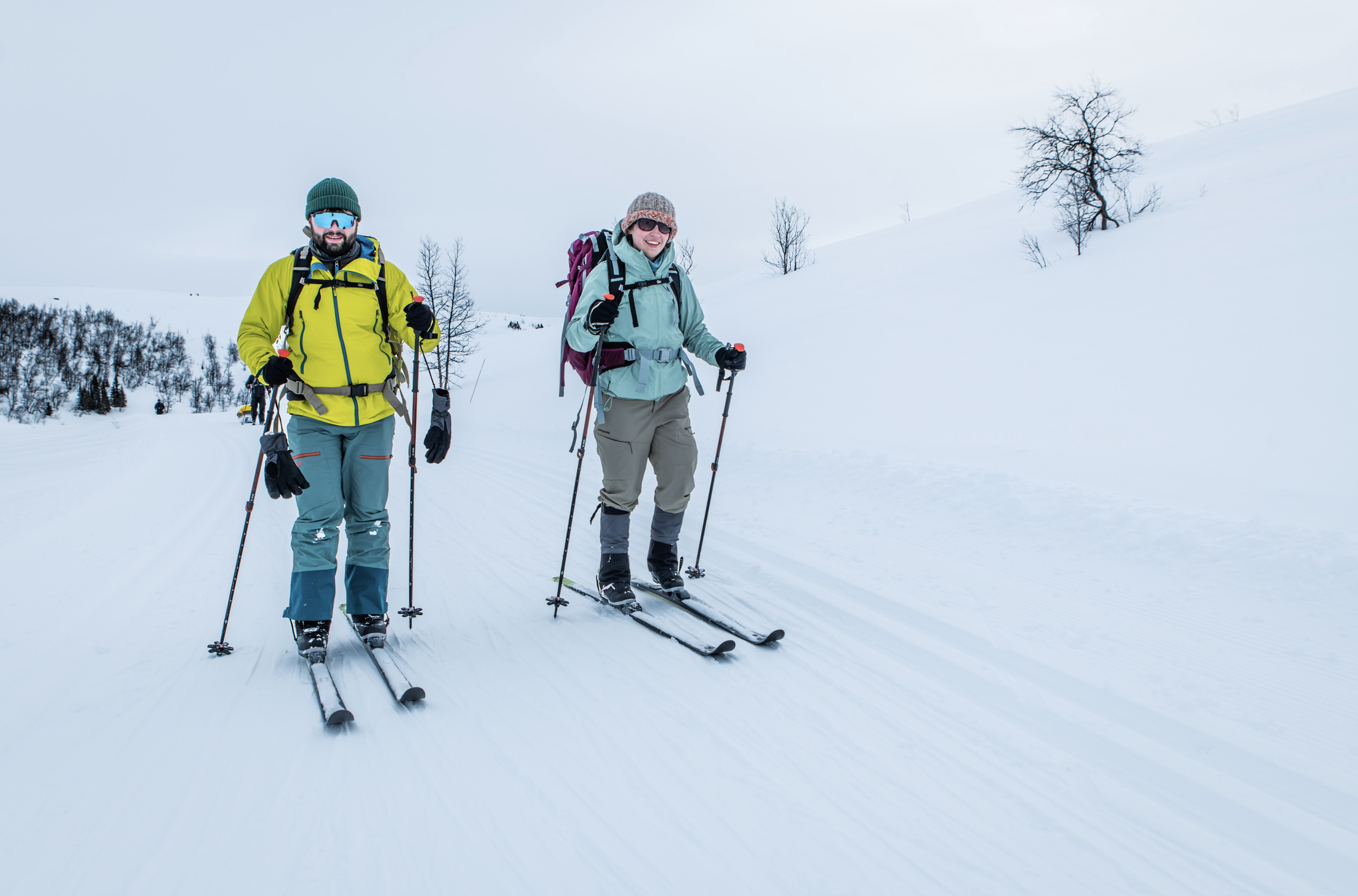
We start on prepared tracks without pulks, giving you space to focus purely on movement. This is where we work through the full ski system—skis, bindings, skins, and waxes—so you understand how everything works and how to move efficiently on the snow.
Alongside this, we introduce avalanche transceivers—basic functions, checks, and making sure everyone is confident using them properly from the start.
Once movement begins to settle, we bring the pulks back into the system. You’ll load them properly and begin travelling with them, learning how they affect balance, pacing, and uphill movement as we make our way up onto the plateau.
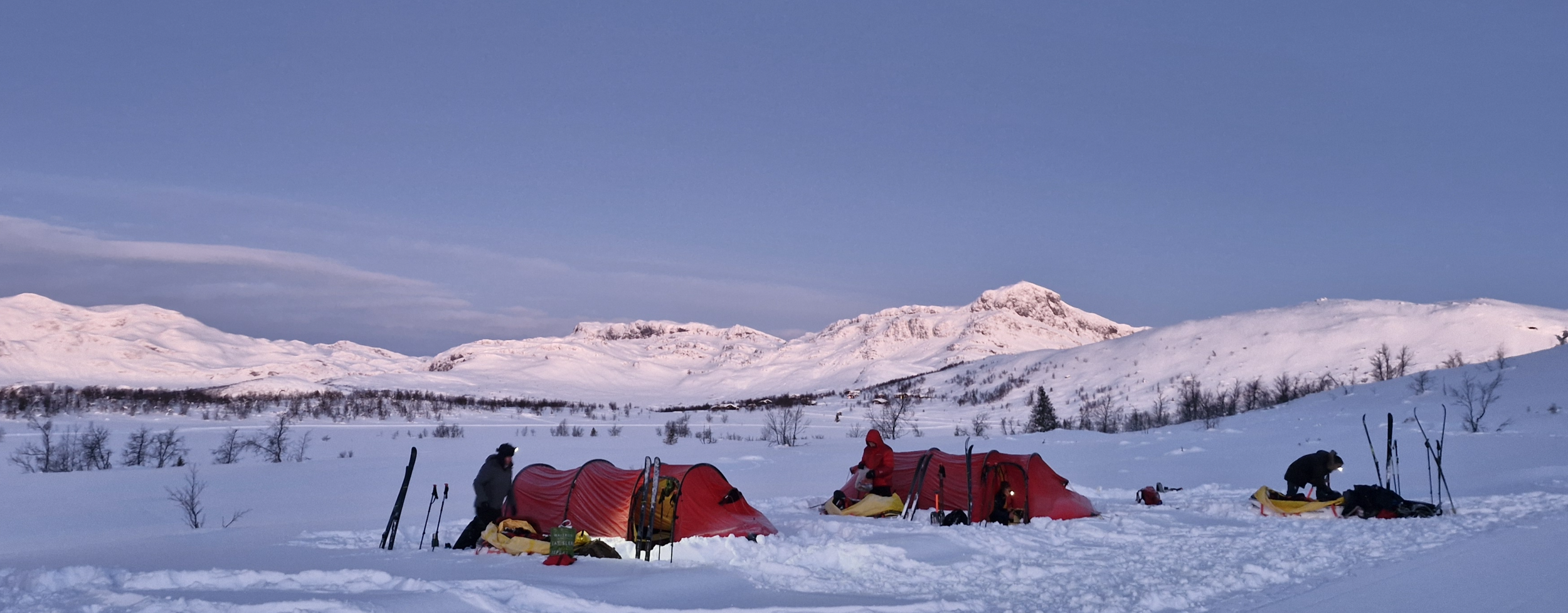
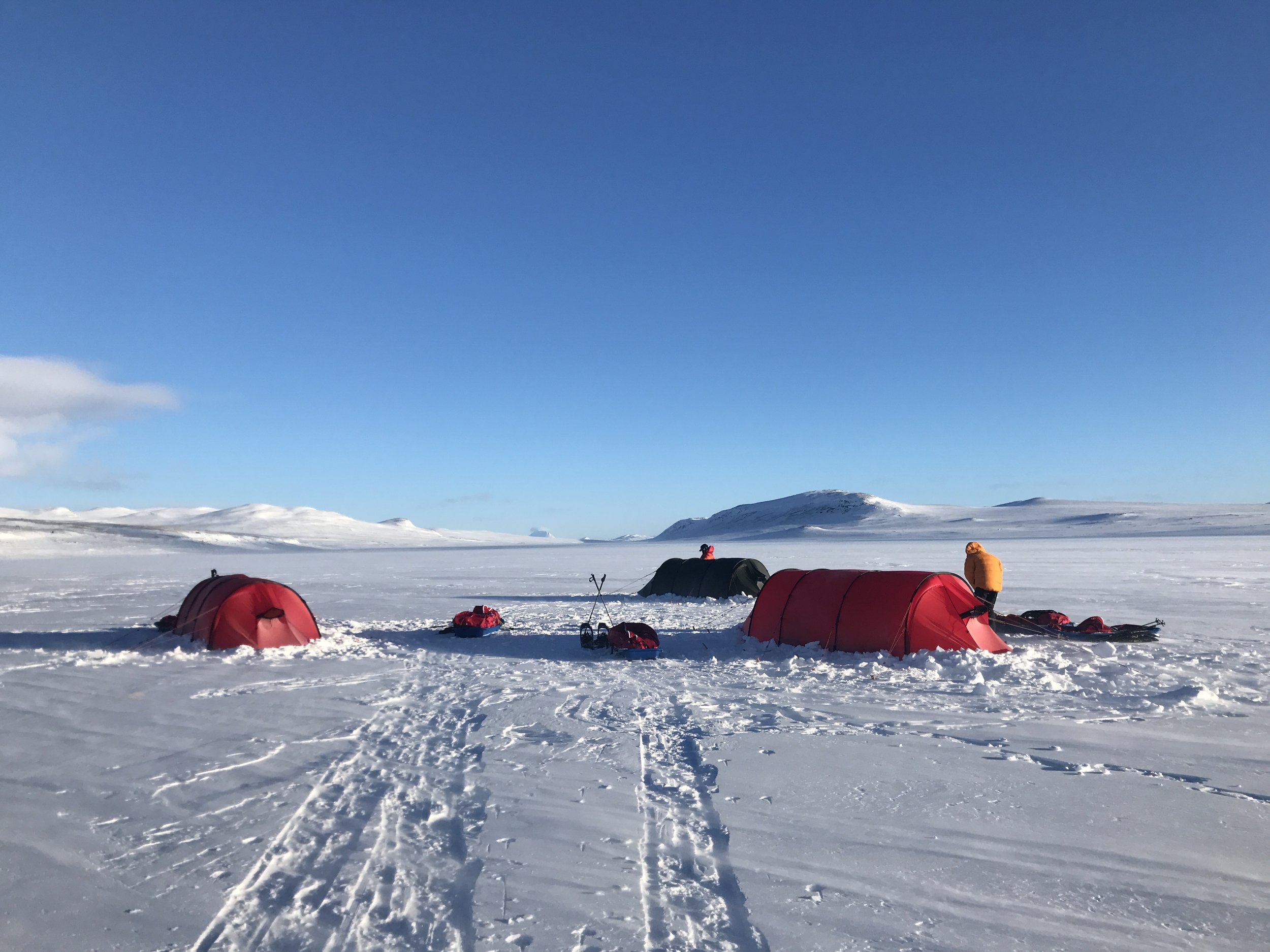
By late afternoon we establish camp. This is your first proper look at winter campcraft:
Positioning tents in relation to wind and terrain
Using snow anchors and pegs to secure tents properly
Creating a functional camp layout, including kitchen areas
Cutting cold air wells in the porch to manage airflow and improve stove safety
Setting up your sleeping system so it stays warm and organised
Stove use and cooking in cold conditions
It’s a full first day, but by the evening you’ve moved from basic movement to travelling with a loaded pulk and setting up a functional winter camp.

Day 3 – Building ski control and moving off track
By now, things start to feel more familiar.
We move on from the tracks and begin travelling off-piste, progressing ski skills into more realistic terrain. The focus is on control rather than speed—steeper downhill sections, learning to stay balanced, and managing movement properly without a pulk first.
You’ll work through:
Herringboning on steeper ground
Side stepping and controlled ascent
More confident downhill movement
As the day goes on, we begin linking this into proper journeying—moving as a team across untracked terrain rather than just practising in isolation.
Campcraft shifts as well. You’ll be doing far more independently now, with guides stepping in where needed rather than leading every part of the process. Packing, pitching, and cooking all start to become your system rather than something being shown to you.
We also introduce snow shelter systems, looking at different types of snowholes and when they are appropriate—simple emergency shelters through to more developed snow caves—along with site selection, basic construction, and how they fit into expedition decision making.
Day 4 – Technical skills and operating in real terrain
This is where things come together in a more technical way.
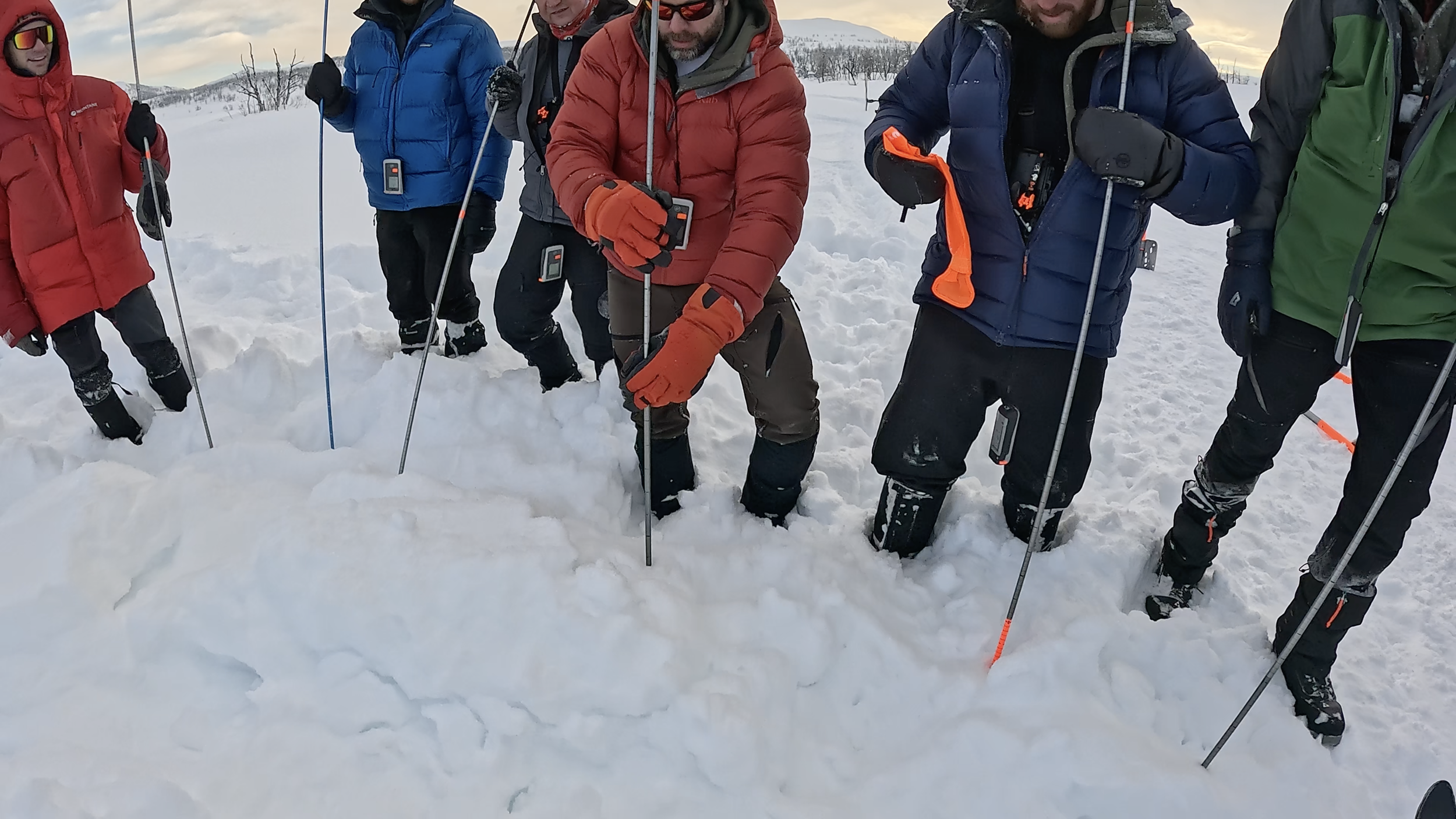
We spend time working properly on avalanche awareness—using transceivers, probing, shovelling, and running through group burial scenarios so everyone understands what it actually looks like in practice.
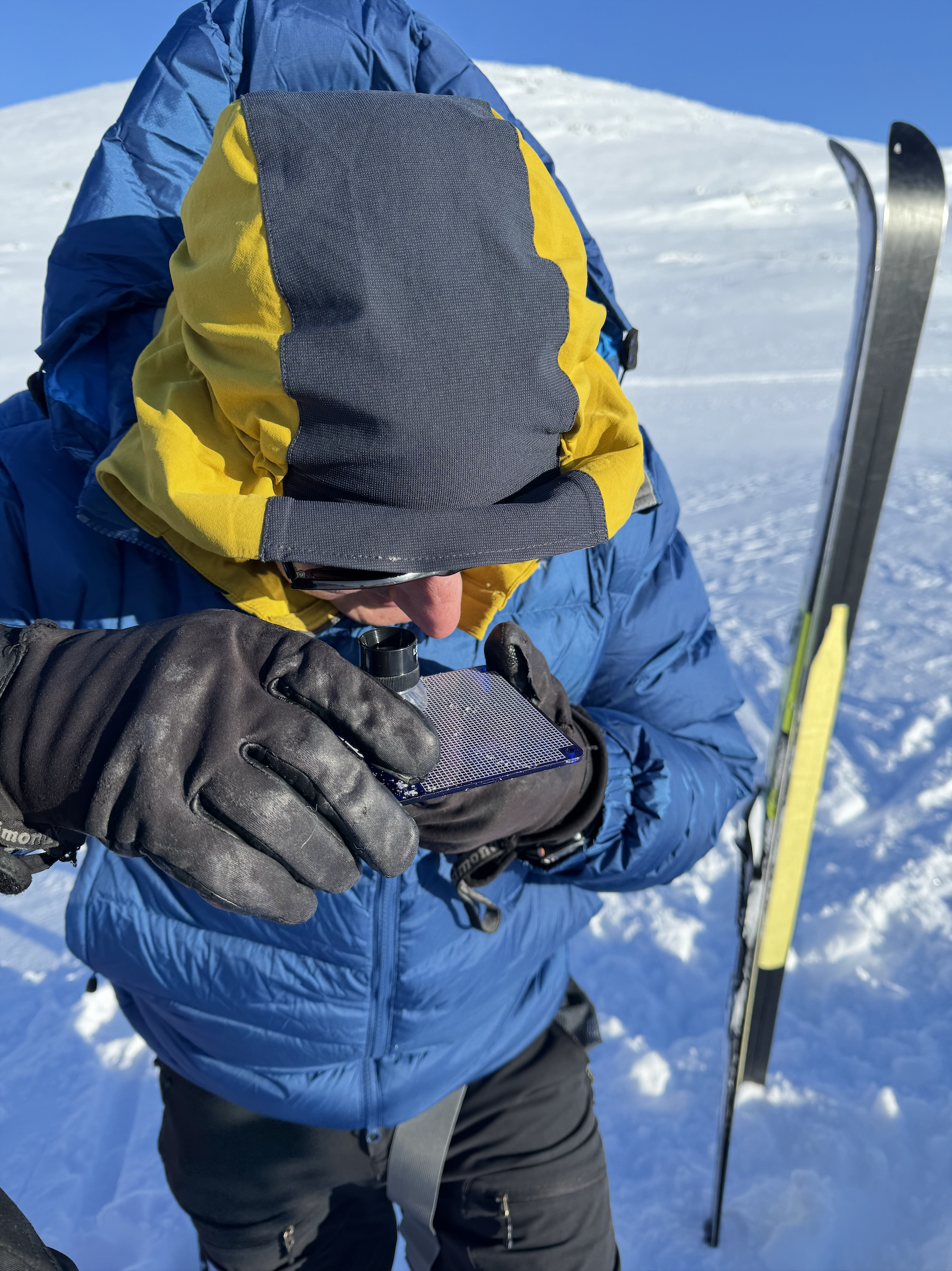
We also dig into the snowpack, looking at layers and stability, and how that feeds into decision making on the ground.
From there, we move into:
Navigation in more complex terrain
Testing ice thickness and moving safely across frozen lakes
Group protocols for lake crossings
Crevasse rescue systems with pulks
Steeper off-piste travel, including sustained uphill movement
It’s a big day, but it gives you a clear picture of what’s involved in operating safely in winter environments beyond simple terrain.
Day 5 – Descent and putting it all together
Early start again.
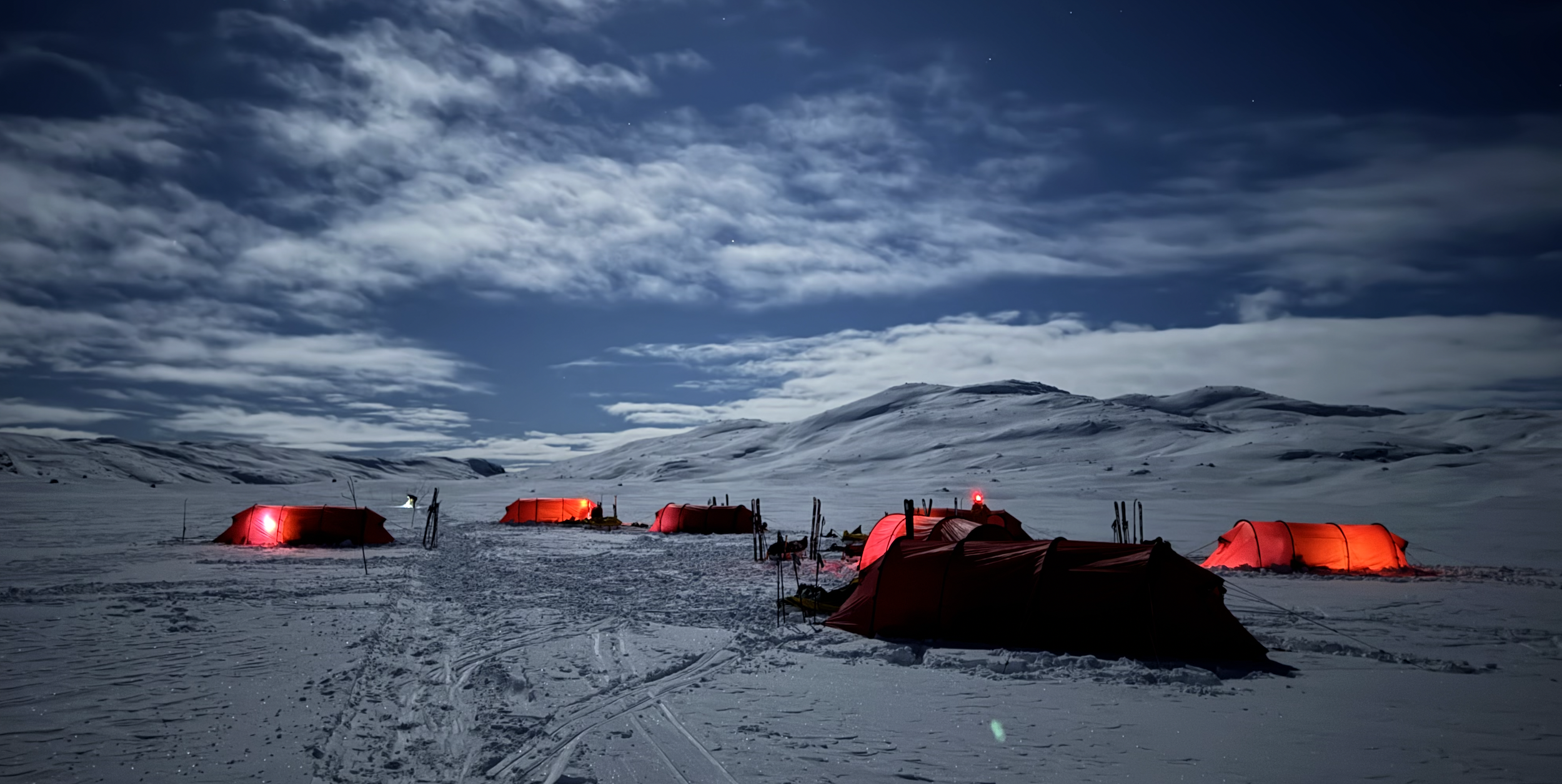
We begin the descent back towards the valley, this time with everything combined—movement, systems, and decision making. Downhill skiing with a loaded pulk feels very different to earlier in the week, and this is where the progress really shows.
By now, things that felt slow or clunky at the start—packing, moving, setting up—are quicker and more instinctive.
We aim to reach transport mid-morning to lunchtime, then head back to Oslo. Once back, we turn around kit and head out for a meal together, looking back on the week and what’s next.
(In theory you could take a late flight this evening, but it’s tight and not something we’d recommend.)
Day 6 – Departure
Fly home.
By the end of the week, you’ll have built the core systems—movement, campcraft, and decision making—to operate independently in winter conditions. More importantly, you’ll understand how it all fits together on a journey.
For most, this is the point where a longer crossing starts to feel realistic rather than hypothetical, and you leave with a clear idea of what the next step looks like.

The Details
Cost per place on the expedition: £1295
-
Accommodation – 3 nights (2 tent, 1 hut) Regularly we spend the 3 nights in tents. Depends on weather, route, team etc etc
Mountain Transfers - to and from.
Meals – 3 breakfasts, 2 lunches and 3 evening meals
Use of pulk system
Mountain tents, stoves and pans
Expedition food and fuel
Medical safety equipment and supplies
Expedition team leader
Access to our RMS team of doctors (please see website information for more details)
Supply and use of personal avalanche transceivers.
-
Travel to and from departure airport
International flights and taxes
Personal equipment (including ski rental package)
Travel insurance
Drinks, snacks and personal spending
-
This expedition is open to those with good fitness and a strong mindset for winter conditions. No prior polar travel experience is required, but experience with multi-day trekking or mountain journeys is beneficial. You’ll be skiing or snowshoeing long distances, pulling a pulk, and sleeping in tents as part of a self-supported journey. The focus is on learning through experience, so adaptability and a willingness to develop new skills are key.
-
2 night in polar tents, 1 night in huts (if the route takes is via a hut -although there is an option to spend one of the nights in a snow hole if conditions allow.
-
We will have a substantial breakfast to start the day. Lunches consist of individual ration packs with picnic style foods and high energy foods. Evening meals will consist of expedition food, which each of us will prepare on their liquid stove.
Please bring with you extra snacks for during the day if required.
If you have food allergies or intolerances, please inform us in your Booking Form. We will aim to cater to your needs, but it is advisable to also bring your own supplies from home.
-
This is an unsupported crossing – for the duration of the trip, you will pull a pulk, containing all of your equipment. The pulk will be strapped on with a waist and shoulder harness, connected to the pulk with rigid bars.
-
All our UK leaders hold first aid certificates and carry a fully equipped first aid kit for emergencies. We recommend that you carry a personal First Aid kit and hand sanitizers / antibacterial wipes as well as any personal medical requirements.
When selecting your trip please carefully read the information and itinerary and assess your ability to cope with our style of travel. Please refer to the trek rating for trip specific information. If you have any concerns, please contact us before booking. Nordur reserves the right to exclude any traveller from all or part of a trip without refund if in the reasonable opinion of your guide they are unable to complete the itinerary without undue risk to yourself and/or the rest of the group.
-
Visas for entry into Norway are not required by nationals of the UK, Ireland and most EU countries. Contact your local embassy, or consulate for the most up-to-date visa requirements. It is your responsibility to have the correct travel documentation.
-
The local currency is Norwegian Kroner (NOK). We advise you to take local currency with you as there may not be time to obtain currency from banks.
-
Please scroll down and you will see the dates
Ready to start your polar journey? Reserve your space on our next expedition below.
But don’t take our word for it have a look below at the media reel that shows you some of the highlights on offer during the week.
Our Polar Training Photo Gallery





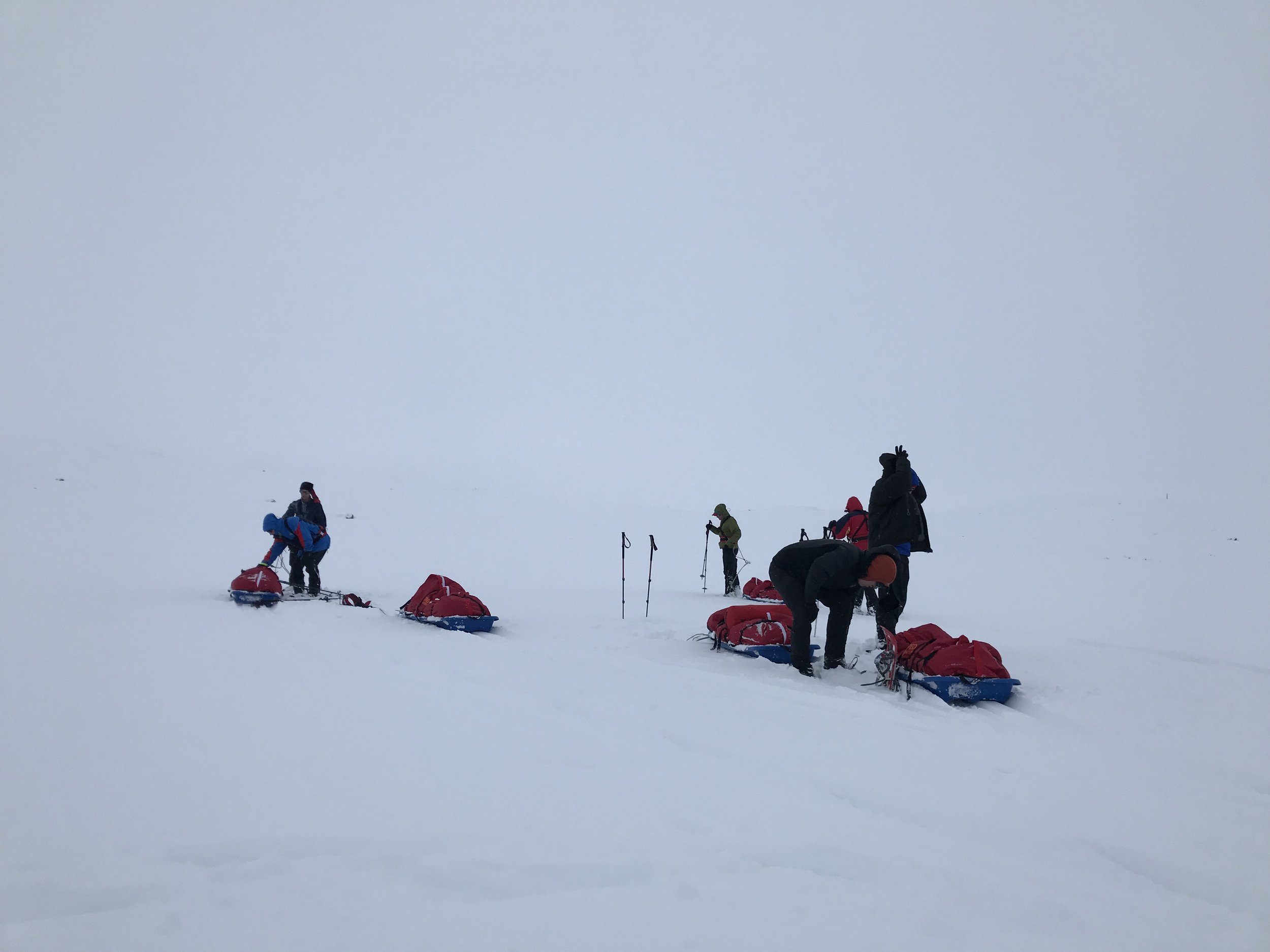


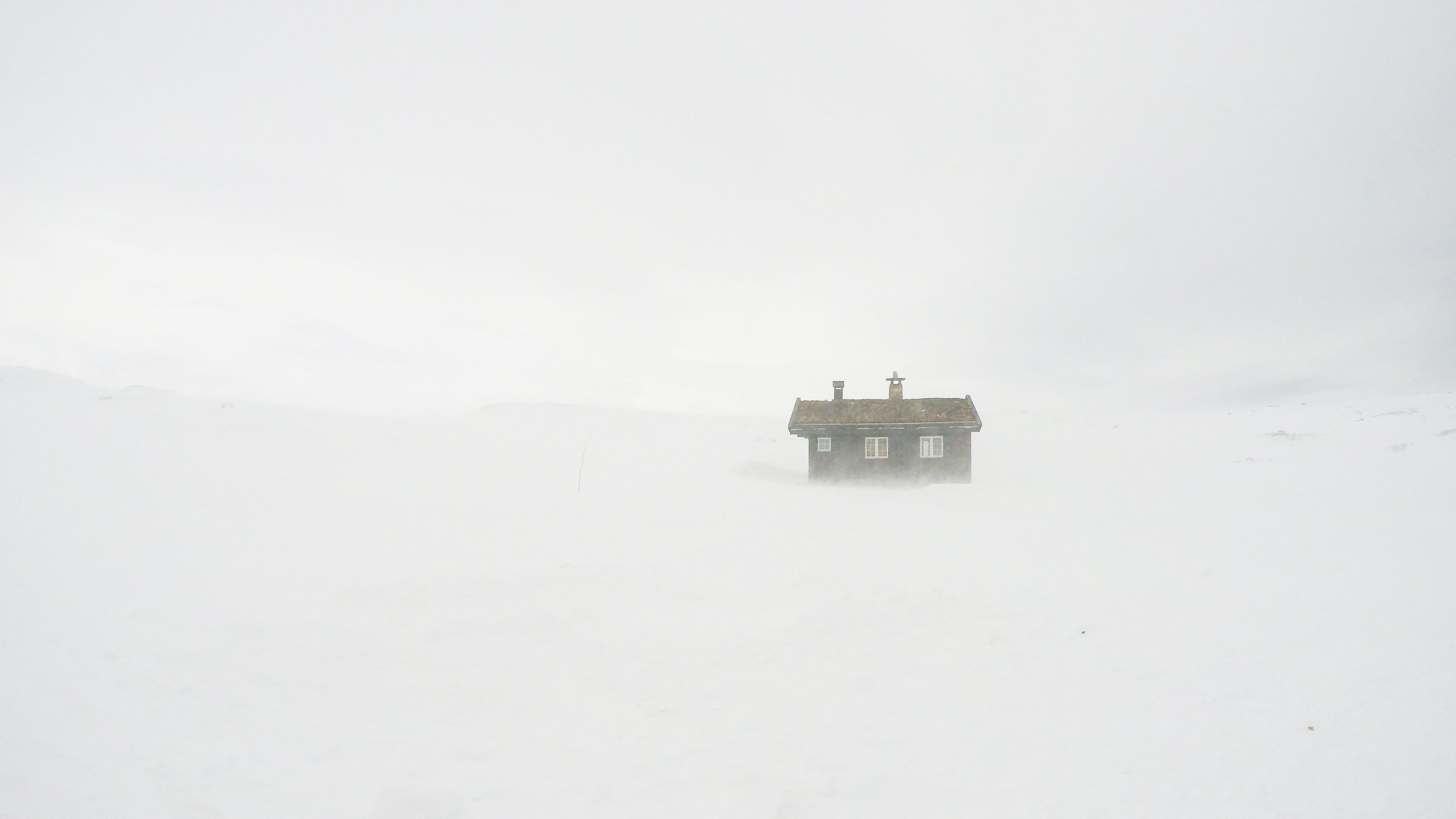
Expedition Safety
Your Safety is Our Top Priority on Every Trip
At Nordur, the safety and well-being of our adventurers are our top priority. We are dedicated to providing a thrilling and immersive journey across the Huldreheimen, while ensuring a secure and well-managed experience.
Our experienced guides are highly skilled in winter navigation, emergency first aid, and risk management. With extensive knowledge of the Hardangervidda’s terrain and ever-changing weather patterns, they are equipped to make informed decisions in real-time, ensuring your safety throughout the expedition.
Prior to the polar training course, you will be supplied with a comprehensive equipment list. The training course is not only a chance to learn essential safety protocols, route details, and emergency procedures, but also an opportunity to get hands-on experience with all the gear. You'll practice setting up tents, managing your pulk, and handling night-time routines like stove management. Jamie is always available to answer any questions about equipment over the phone or by email, ensuring you’re fully prepared.
Due to the environment we are operating in, only the best group equipment is provided. This includes Hilleberg Keron 3GT tents, Fjellpulken pulk systems, and, of course, the essential winter expedition gear:Snow shovel and probes. Emergency equipment we carry is first aid kits, personal locator beacons (PLB), InReach device, and a satellite phone for reliable communication.
If you're ready for this kind of adventure. We’ll work with you to make sure you’re prepared and confident to take on the challenges of the Hardangervidda.
Notes from the Director
The crisp crunch of snow underfoot, the distant glow of a winter sun barely skimming the horizon, and the silence of a frozen world stretching ahead. This is winter in Huldreheimen—a land shaped by ice and snow, where the mountains roll into endless white and the cold air sharpens the senses.
I was 17 the first time I clipped into a pair of cross-country skis. Before that, my only experience on skis had been a dry slope. We were outside the Espedalen Hotel in Norway, and I was standing between two vastly experienced skiers. One was a Major in the Army, a specialist in Arctic warfare and a chief instructor in the Joint Services adventure unit, with decades of mountaineering and skiing behind him. The other was the star of the British downhill skiing team. I can still feel the pressure, the nervous excitement of that moment. The next minute, I was following them up the valley—hundreds of metres of climbing, barely able to stay upright. Bambi on ice.
Ten days later, after relentless mocking, painful lessons, and endless mistakes, I was totally hooked. I’ve never looked back.
This way of learning—fully immersed, guided by experts, in a real environment—has shaped everything I believe about how to break into polar travel. The Huldreheimen Crossing is built around that same principle. It’s not about watching videos or practicing on a groomed track—it’s about being out there, learning through experience, with the right coaching and support.
Led by Jamie Annetts, an experienced polar guide and coach, this training is unique. It’s the most efficient, exciting, and hands-on way to gain real winter expedition skills. Huldreheimen is the perfect location—easy access from Oslo, undulating terrain that challenges but doesn’t overwhelm, and a network of remote but well-placed huts that allow for progression.
If you want a fast track into polar travel, this is it. Learn the Essential Skills for Arctic & Polar Expeditions
This isn’t just a checklist of skills—it’s a full immersion into winter travel, where you’ll test, compare, and refine different techniques. Every skill has real-world application, and you’ll be encouraged to experiment, push your limits, and take notes because everything you learn here will be useful for future expeditions.

Available trip departures
14th - 19th February 2027 - Spaces Available
29th January - 03rd February 2027 - Limited Availability
19th - 24th February 2027 - Fully Booked