
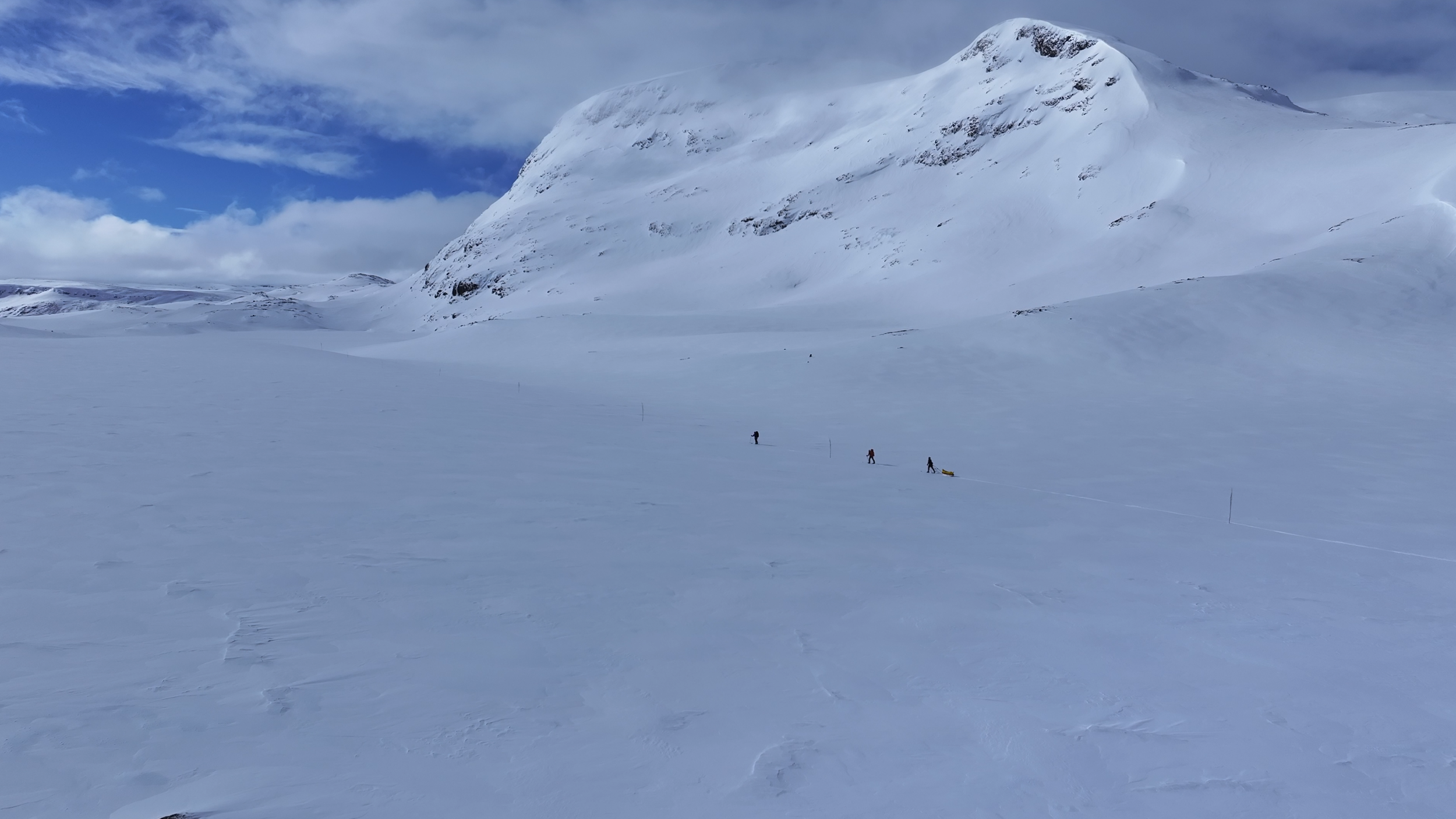
MASSIV: Norway’s Great Winter Ski Crossing:
A long-distance 350km ski expedition from Sota Sæter to Haukeliseter through Breheimen, Jotunheimen, Skarvheimen and Hardangervidda.
The Crossing Highlights
COST : £8500
DAYS: 21
LEVEL: 4
Over a 350kms distance covered on Ski

Frozen lakes, sub zero temperatures, high winds all the elements for a proper adventure

This trip pushes Nordic to the max with regular climbs and descents up and over glacier level.

Hut - Hut Journey based around Staffed/Self serviced DNT huts. With some nights in tents.

Chance to link and move through 4 of the best national parks in Norway whilst missing the busy access and egress points.

Below is the map of our route through the plateau

MASSIV Winter Ski Crossing Itinerary
Day 0 – Arrive in Oslo
Arrive in Oslo at any time before Day 1. Overnight in Oslo.
Day 1 – Kit check and travel to the start
Morning kit check, final packing, and expedition briefing.
We will check personal clothing, ski equipment, pulk systems, food, fuel, emergency equipment, and group kit before travelling towards the start of the route at Sota Sæter.
Transport to the start may involve train, bus, taxi, or private transfer, depending on current timetables and road access.
Day 2 to Day 20 – Ski the MASSIV route
The winter MASSIV route runs from Sota Sæter to Haukeliseter and crosses four major mountain areas:
Breheimen – Jotunheimen – Skarvheimen – Hardangervidda
The full winter route is approximately 325 km and is normally broken into around 19 ski stages. Daily distances vary, but most days are likely to be between 12 km and 25 km, depending on terrain, snow conditions, weather, visibility, and group speed.
The route uses the Norwegian mountain hut network where possible. Some huts may be staffed, some self-service, and some unstaffed. Access, opening dates, food availability, and route choice will be confirmed during planning and checked again before departure.
Participants should expect long days on skis, cold conditions, exposed plateau travel, variable snow, and the need to manage personal kit efficiently throughout the journey.
Day 21 – Finish at Haukeliseter and return towards Oslo
The planned finish point is Haukeliseter.
From Haukeliseter we return towards Oslo by bus, train, or transfer, depending on available transport and the final arrival time.
Route Sections
Breheimen
The route starts at Sota Sæter and moves into Breheimen. This section includes longer climbs, remote huts, and more complex mountain terrain.
Jotunheimen
The route continues through Jotunheimen, Norway’s highest mountain area. This section includes higher terrain, longer stages, and more serious weather exposure.
Skarvheimen
Skarvheimen links Jotunheimen with the plateau country farther south. This section involves hut-to-hut ski travel through varied mountain terrain.
Hardangervidda
The final section crosses Hardangervidda towards Haukeliseter. This is broad, open plateau terrain where wind, visibility, and snow conditions can have a major effect on progress.
Contingency Budget
A fixed day-by-day itinerary is not realistic for this route.
Weather, snow conditions, hut access, transport, avalanche conditions, and group pace can all affect the final plan. The route may need to be shortened, adapted, delayed, or finished at a different point.
Participants should have a contingency budget for additional transport, accommodation, meals, or changed travel arrangements.
This may be needed if the group is delayed by weather, arrives early, changes finish point, or needs to use different transport back to Oslo.
What Kit will I need and what can I rent?
If you have all of the equipment to keep you safe in the UK mountains, the rest you can rent from us.
Such as:
Arctic jacket (£)
Arctic Sleeping bag (£)
Arctic Roll mat (£)
Nordic ski set up (Skis, bindings, boots, skins, waxes, ski poles) (£)
Medium and heavy weight mitts (£)
Nordur’s group kit
Hilleberg Keron 3 GT tent
Fjellpulken Traverse and Tour pulks
Mammut Barryvox transceivers, Probes and shovels.
We cook all of our meals inside the cold air well in the vestibule of our tunnel tents. We use an MSR XGK Liquid fuel stoves to melt snow and then use the water for drinking and to rehydrate rations. You will choose each meal on your ration request provided during the booking process.
Communication
Emergency equipment we carry is first aid kits, personal locator beacons (PLB), InReach device, and a satellite phone for reliable communication.

The detail
Cost per place on the expedition: £8500
Inclusions
Accommodation – 20 nights Self service/Serviced huts + Wild camping in tents.
All in-country transfers, Excluding airport transfers
Meals – 19 breakfasts, 19 lunches and 19 evening meals
Use of pulk system
Mountain tents, stoves and pans
Expedition food and fuel
Medical safety equipment and supplies
Expedition team leader
Avalanche Transceiver
UK Based (Aviemore area) mandatory training course - Guiding only (Accommodation and food not included)
Exclusions
Travel to and from departure airport/Into Oslo centre.
International flights and taxes
Personal equipment (Skis,Skins,Boots,Poles, Snowshoes etc)
Travel insurance
Drinks, snacks and personal spending (meals not stated in the inclusions section)
Accommodation, Food & equipment for the UK training course
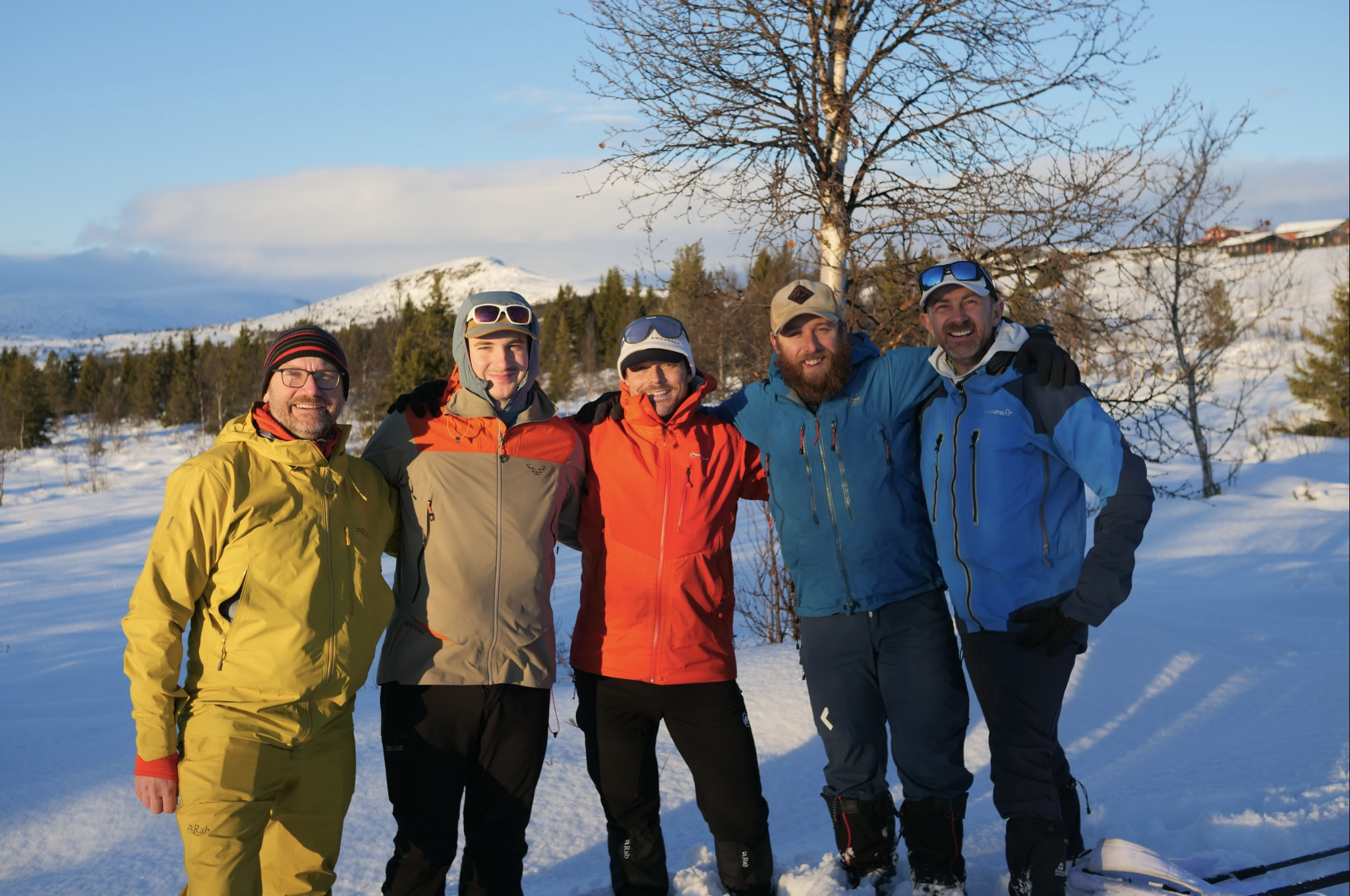
Your guides
Your guides aren’t just qualified experienced local leaders but they are also passionate instructors who love to impart knowledge and develop people.
We operate with a small, selected and honed team of expedition guides who have a wealth of background from ex military, teaching, engineering, film and safety work, first and medicine. If you are interested about finding out about individual guides and what they are about then please follow this link for their bios.
Notes from the Director
For nearly eight months of the year, the Hardangervidda plateau transforms into a vast, treeless, and windswept wilderness. Snow blankets the landscape, making it an ideal destination for those seeking a challenging self-supported polar journey. The constant hiss of snow drift – ranging from feather-light powder to a steel-hard crust – fills the air, while the wind carves the snow into furrows, ridges, and frozen waves. This unique environment provides an authentic experience, offering a taste of the conditions faced on a true polar expedition.
The Hardangervidda crossing has long been a challenge for explorers. Even Roald Amundsen, famed for his success in polar exploration, attempted to traverse the plateau on skis, failing multiple times. For years, it was believed to be unconquerable – a testament to the fierce and unpredictable conditions. However, today, with the right mindset, preparation, and fitness, a self-supported crossing of the Hardangervidda is an achievable and immensely rewarding adventure.
This journey is not just about enduring the cold; it's about embracing the stark beauty of the Hardangervidda. The sight of reindeer herds roaming across the snow-covered plains serves as a reminder of the resilience of nature. As you pull your pulk across the frozen expanse, you’ll experience the silence and solitude of this remote wilderness, honing your skills and learning the rhythm of polar travel.
While prior experience with polar expeditions is beneficial, it's not essential. What’s most important is a good level of fitness, adaptability, and a determined attitude. This expedition is the perfect introduction to self-sufficient polar journeys, teaching you to handle your equipment, manage your pulk, and navigate efficiently across the snowy plateau. By the end, you’ll have a taste of what it’s like to be self-reliant in one of the most striking and challenging landscapes on earth.


Our Massiv Expedition Photo Gallery
