
General preparation
-
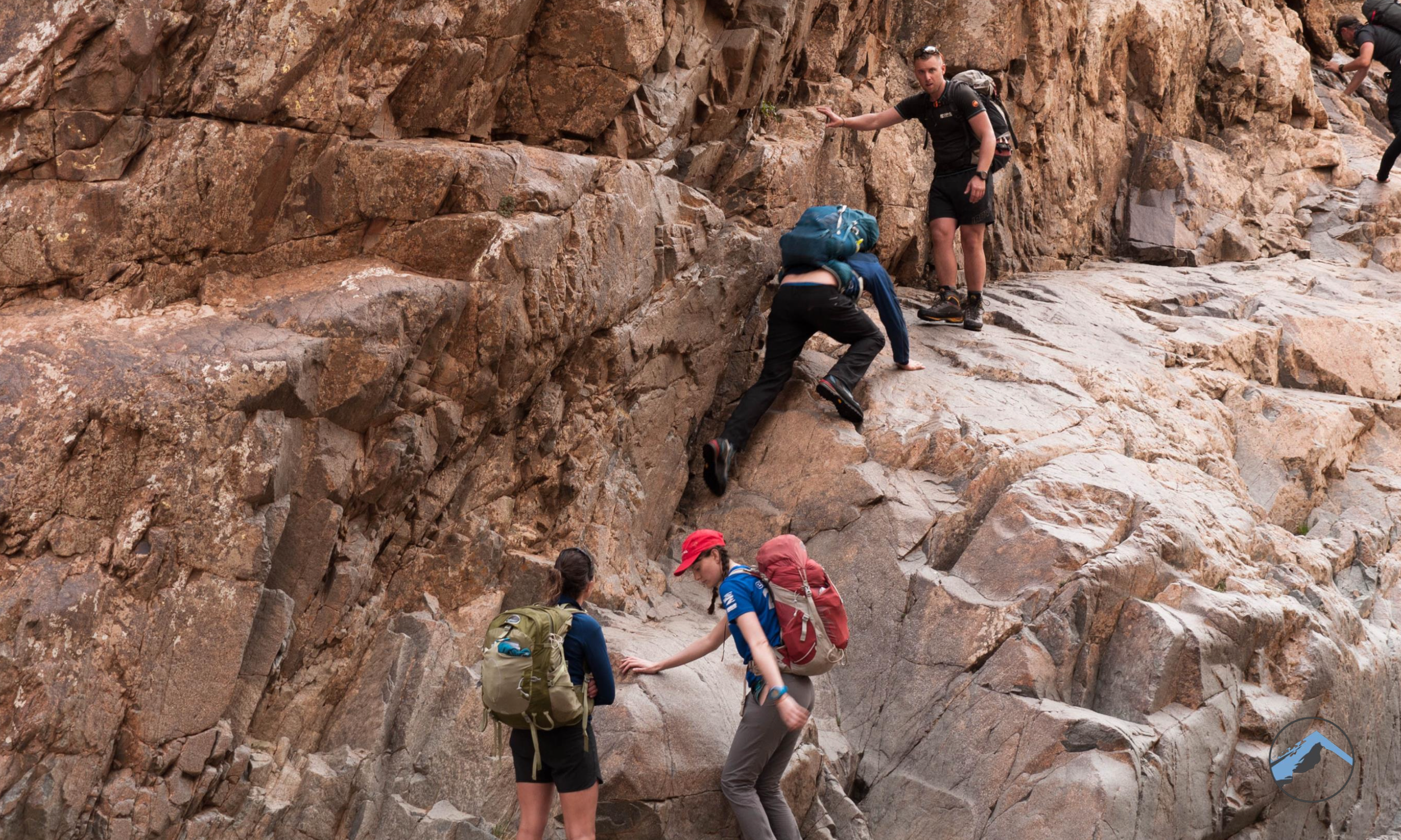
No. A fear of heights does not automatically mean scrambling is not for you. Many people arrive feeling anxious about exposure, especially if they have had little experience of this type of terrain before.
Supporting people who feel nervous on steep or exposed ground is a big part of how Jamie works, and something he cares deeply about. It is also something he has had to manage personally over the course of a 20-year career as a mountaineering instructor, so this is not approached lightly or from a distance.
At Nordur, we work by the challenge by choice principle. That means we will encourage and support you to push yourself, but not in a way that feels forced or dismissive of how you are feeling. As the trip progresses, we build skills, confidence and exposure gradually. When needed, support might be practical and immediate — a tighter rope, a hand on the shoulder, clear instruction, or a quiet word at the right moment.
If fear of heights is something you worry about, please do not let that put you off before you arrive. It is something we are used to working with, and we will help you manage it properly as the trip unfolds.
-
Description as a broad guide, temperatures on High Atlas summer trips can vary a lot with altitude. Lower down in the valleys around Imlil it can be hot, often around 20–35°C in the day, while higher up near refuge level it is usually cooler, around 10–20°C, and summit temperatures are often more like 5–15°C. Early starts, wind and poor weather can make it feel much colder, and there can still be lingering snow patches on some routes. Mountain weather can also change quickly, so you need to be prepared for both strong sun and cold conditions. text goes here
-
The best preparation is regular hillwalking, especially on rough ground, as this is the closest match to what you will actually be doing on the trip. Anything that builds leg strength, steady endurance and time on your feet will help. Good options include hilly walking, hilly biking, StairMaster sessions, spinning classes, and longer days out carrying a light pack. The main aim is to get used to moving uphill for sustained periods and to build enough basic fitness that you can still move well on consecutive days.ion text goes here
-
We stay in very basic mountain cabins throughout the trip. Conditions are simple and practical, and you should come expecting a proper mountain journey rather than anything luxurious.
-
Morocco uses 220V / 50Hz electricity and commonly uses Type C and Type E sockets. You should pack a travel plug adaptor suitable for Moroccan / European two-pin sockets for use before and after the trek when you are out of the mountains. Most modern phone, camera, watch and power bank chargers are dual voltage, so in many cases you will only need a plug adaptor, not a voltage converter, but you should check your charger label before travel.
-
Very. Always keep hand gel somewhere easy to reach, such as in a trouser pocket or the top of your daypack, and use it regularly throughout the day, especially before eating.
-
You do not need to do anything unusual, but it is sensible to dress modestly when travelling through villages and local towns. Loose, practical clothing that covers shoulders and upper legs is usually the best approach. In the mountains, people will wear normal trekking clothing, but we still encourage everyone to be respectful of the local culture.
-
This is completely normal and nothing to worry about. On the mountain, there will not always be formal toilet facilities, so at times we will need to use discreet spots on the trail. Your guide will help you manage this practically and respectfully, choosing suitable places away from water sources, buildings and paths where possible. It is worth bringing toilet paper, a small zip bag for waste, and hand gel somewhere easy to reach.
-
Yes, as long as you come expecting simple, practical conditions and are happy to be a bit outside your normal routine.
-
It is normal to wonder how you will feel above 3000m. We pace the trip carefully, build height progressively and keep a close eye on how people are moving and feeling. Expect to feel slightly light headed, less energy and maybe a headache when we first get to Mouflons hut.
-
This trip passes through working mountain communities, and part of the experience is travelling respectfully through those places.
-
That is a completely normal thing to wonder about before a trip like this. The good news is that, in most of the huts we use, there are private cubicles and western-style toilets, so there are usually good opportunities to deal with things properly and in private.
The Lepiney hut is a bit more basic in that respect, but we will manage that practically and respectfully. If someone needs a bit more time, privacy, or a good spot away from others, we will help make that happen without any fuss.
It is still worth bringing a few simple things that make life easier, such as hand gel in an easy-to-reach pocket, toilet paper, wet wipes, a small zip bag for used items, and whatever period products you know work best for you. The main thing is not to worry about it in advance — these things are very manageable on the trip, and we are used to helping people deal with them in a normal, calm way.